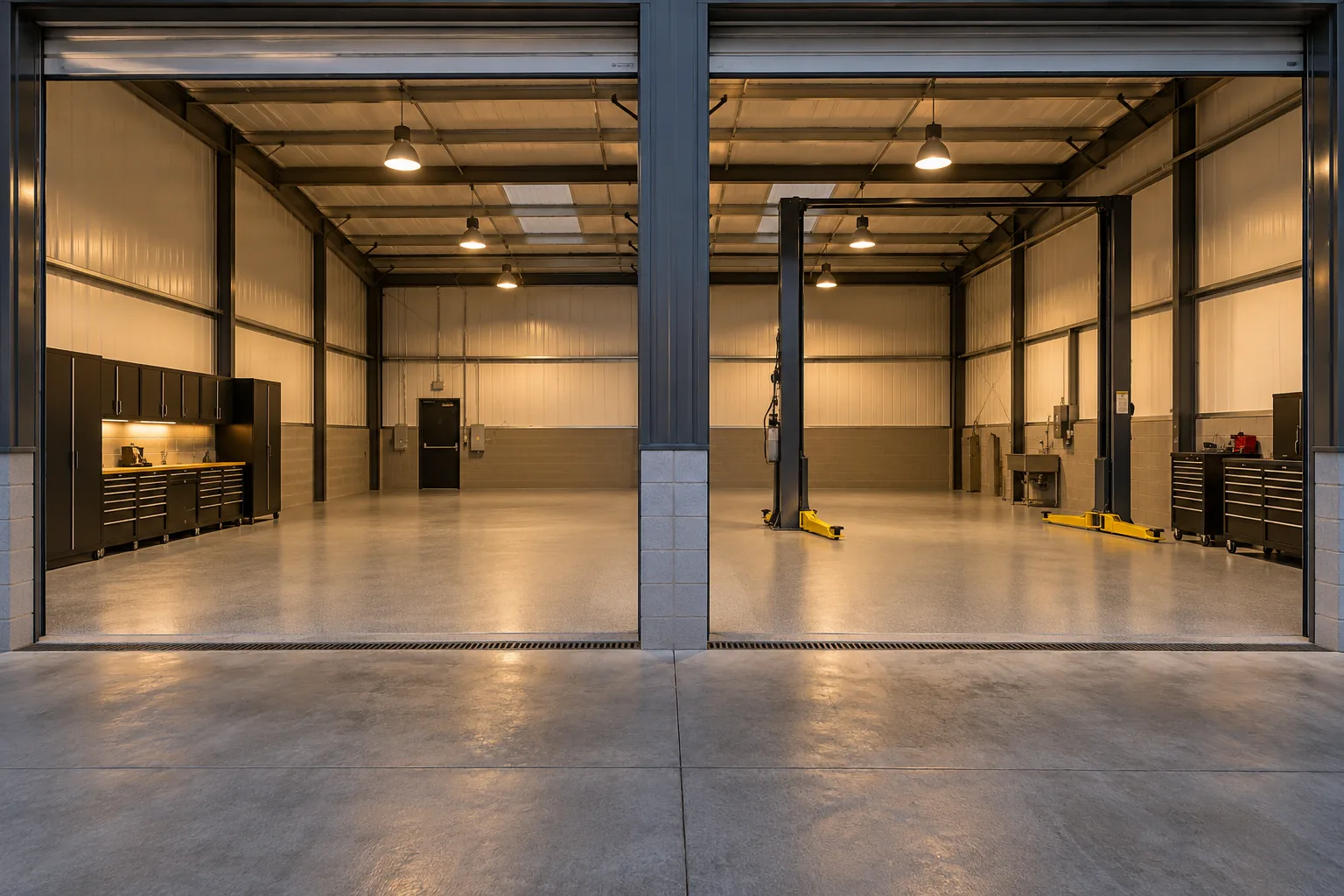
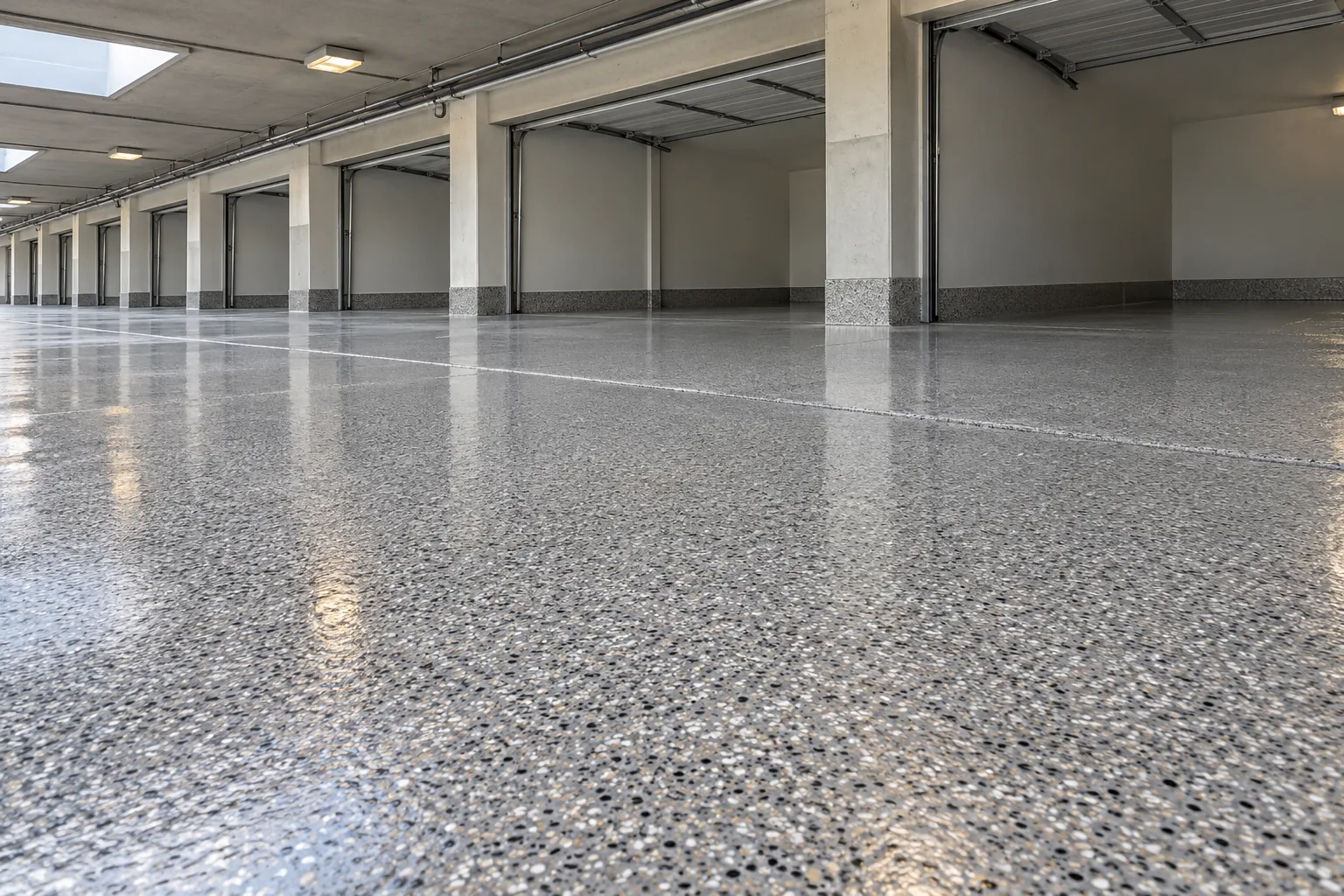
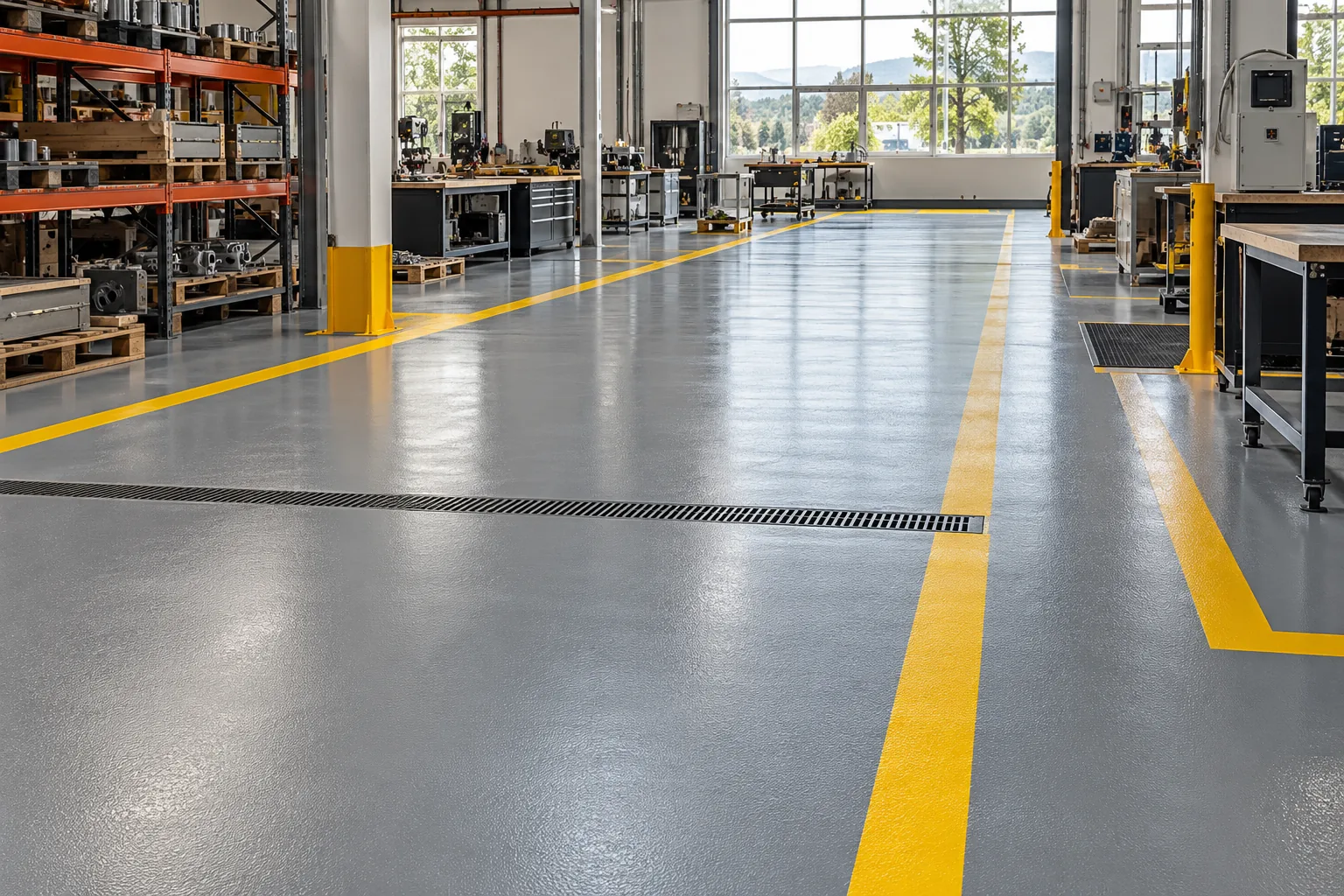
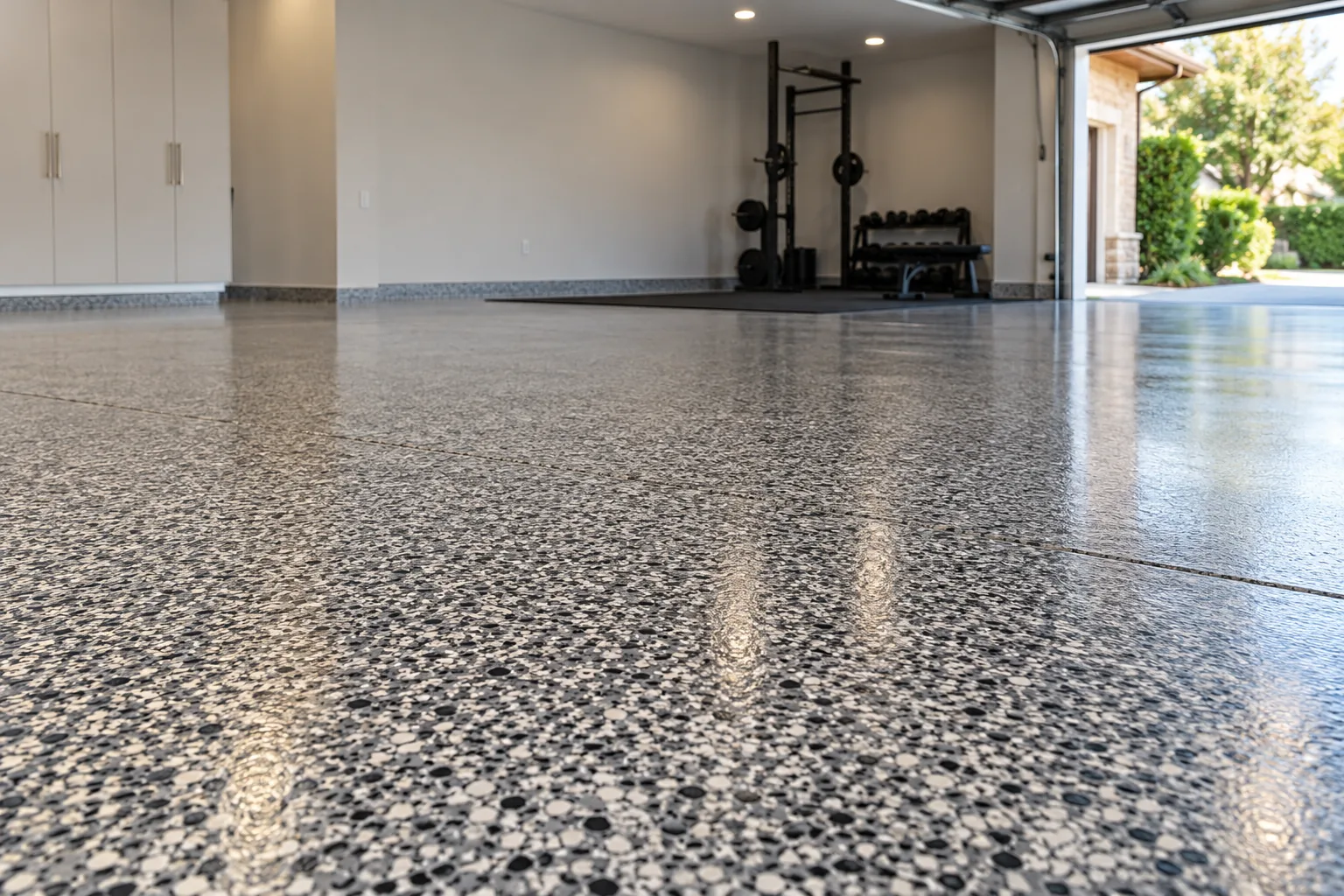
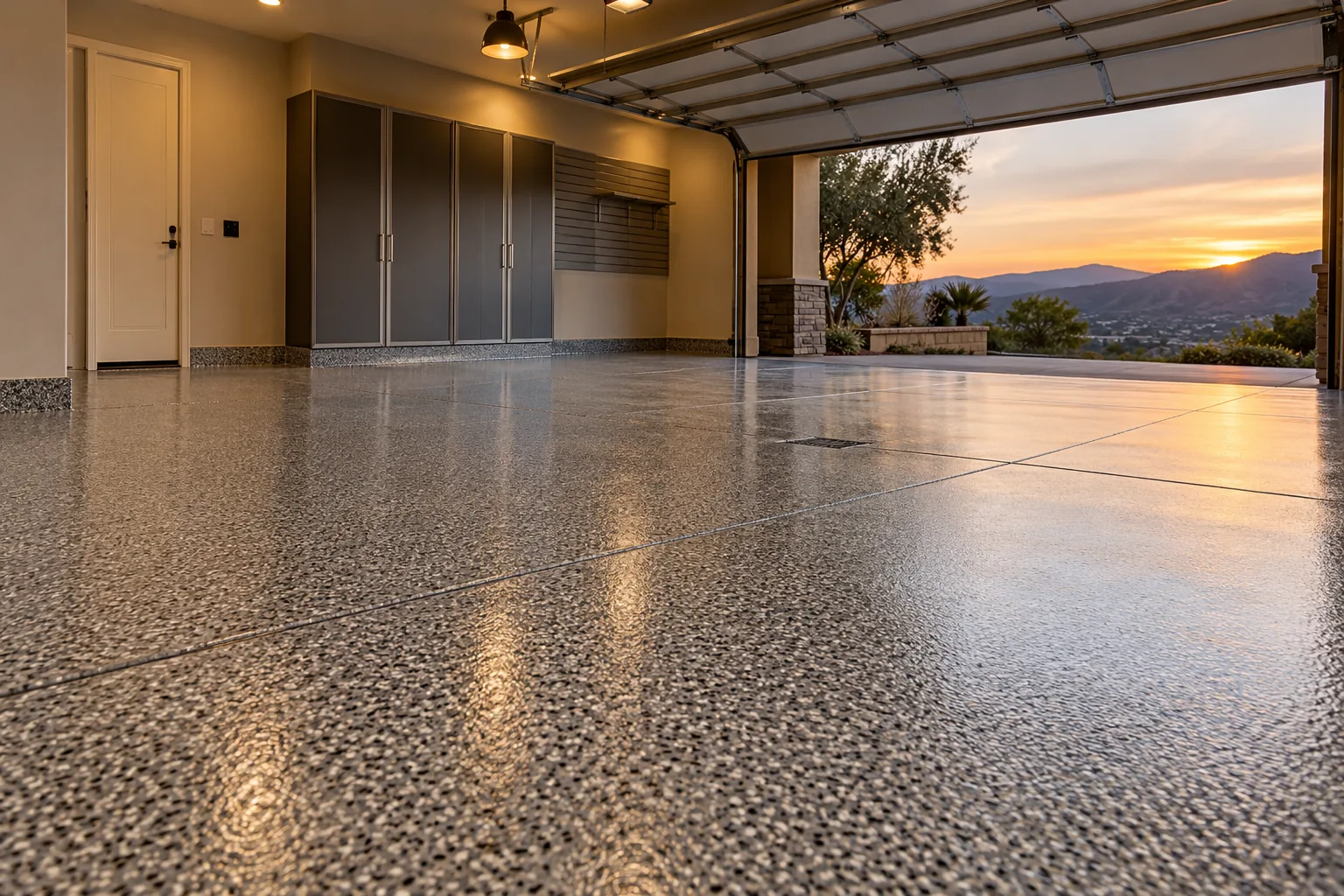
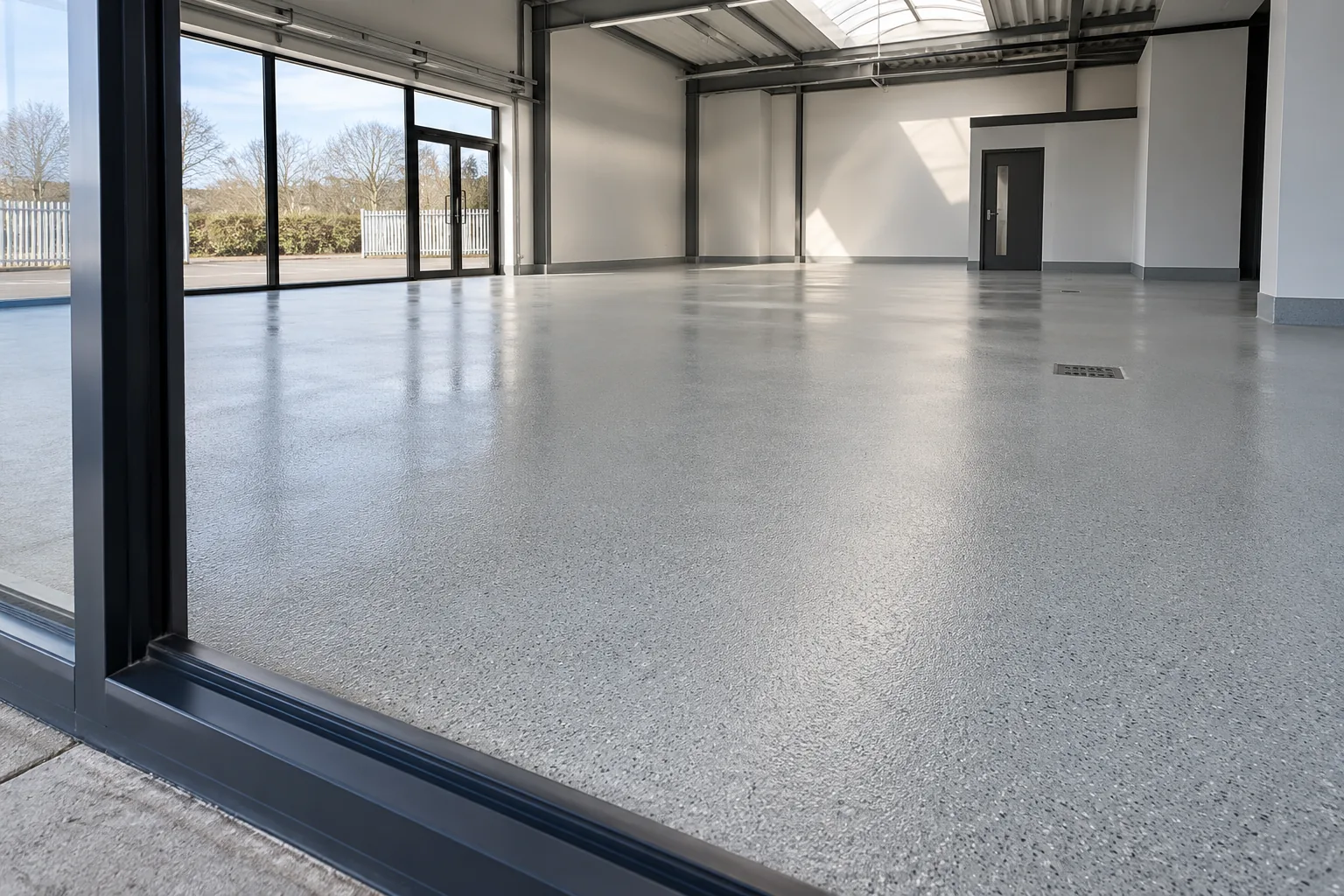
Commercial or multi-car facility floor
- Est. investment
- $5,500 to $14,000 per section (1,000 to 2,000 sq ft)
- Est. duration
- 3 to 5 days
Phased by section, high-build epoxy or quartz, cove and striping as needed
Riverside Epoxy Flooring Group is the Inland Empire's commercial kitchen flooring contractor, working with restaurant owners, franchise operators and school or hospital food service managers on urethane cement kitchen floors, integral cove base, and sloped dish pit and drain details. We handle kitchens from a 600 sq ft prep line to a 2,000 sq ft kitchen, dish room and walk-in corridor coated in one closure.
Request a bid or a site walk
Our crews work occupied restaurants, cafeterias and franchise units, phasing each install around service hours so the dining room keeps its reservations and the line is cooking again on the planned day. Backed by 12 years in business and our 2-year workmanship warranty, we have completed over 1,187 projects, and operator references are available on request.
From the tile tear-out and drain slope check to the cove base and the final hot-water test, our team handles the parts of a kitchen floor job that decide whether it finishes on schedule. Serving Riverside and neighboring Claremont, Diamond Bar and Yorba Linda, we hold the operator's schedule, work nights and weekends when the kitchen is dark, and hand the floor back ready for the next health inspection.
Request a bid with your kitchen size, closing days and current floor, and we will walk the line after service.
What you can hold us to
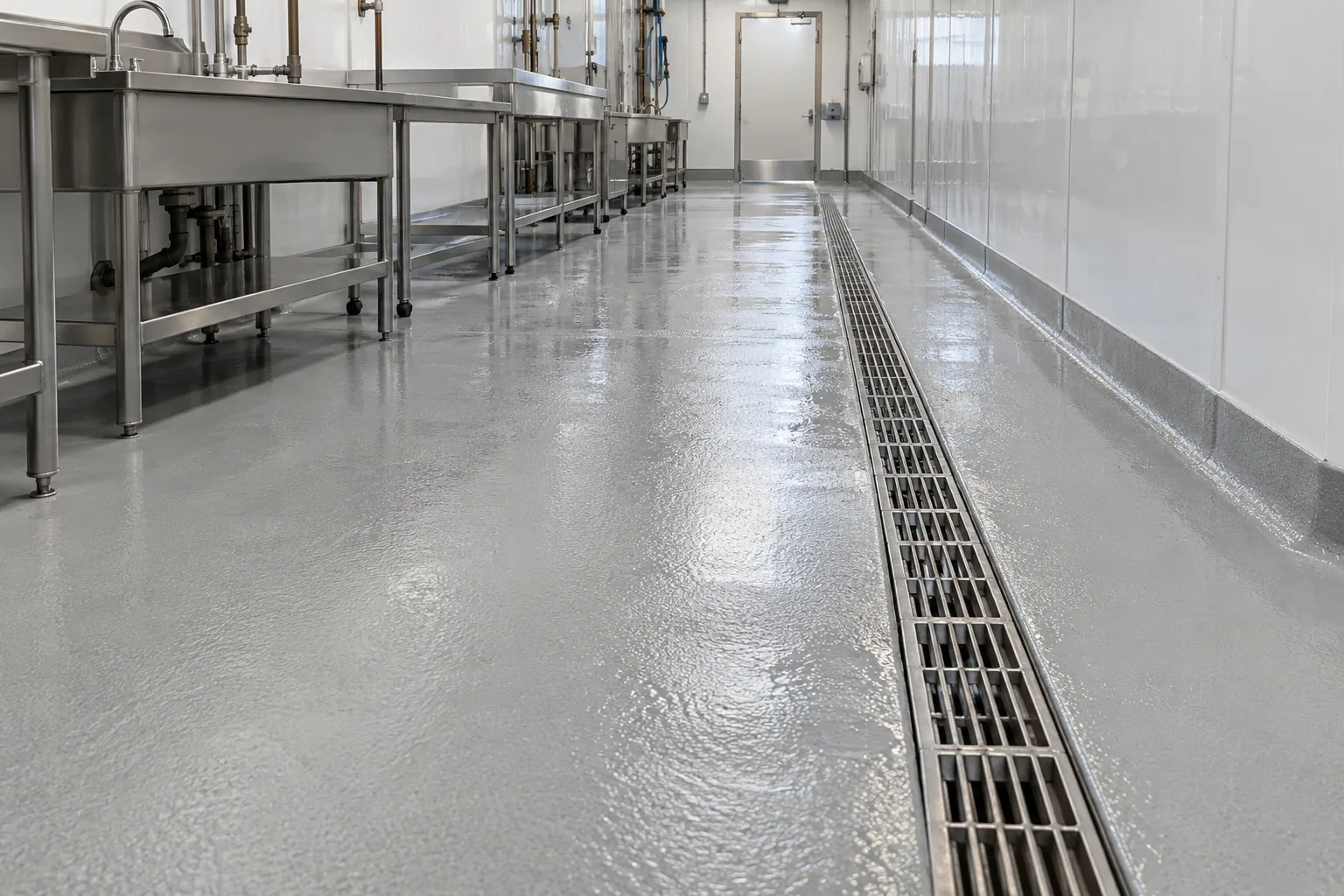
Kitchen tile fails at the grout first, because hot water, grease and degreaser wash it out a little every night until tiles rock and water gets under them. Broken grout lines then hold food soil and bacteria where a mop cannot reach, and a cracked quarry tile by the fryer becomes a trip edge. Elaine's kitchen in Claremont showed all of it: a restaurant kitchen with failing quarry tile, broken grout and a standing-water corner by the dish pit. A seamless resin floor removes every joint, so there is nothing left for water and grease to work into.
Integral cove base is the detail that makes a kitchen floor sanitary, because it carries the floor up the wall as one piece instead of leaving a corner where grease and water collect. We trowel the cove in the same urethane cement as the floor, typically to a height of about four inches, so the floor and the base clean with the same mop and the same chemicals. Under equipment legs, around floor sinks and along the walk-in threshold in Norco and Eastvale units, the coating is carried tight to every edge. Kitchens in Diamond Bar and Yorba Linda strip mall units get the same cove detail as a stand-alone restaurant in Riverside.
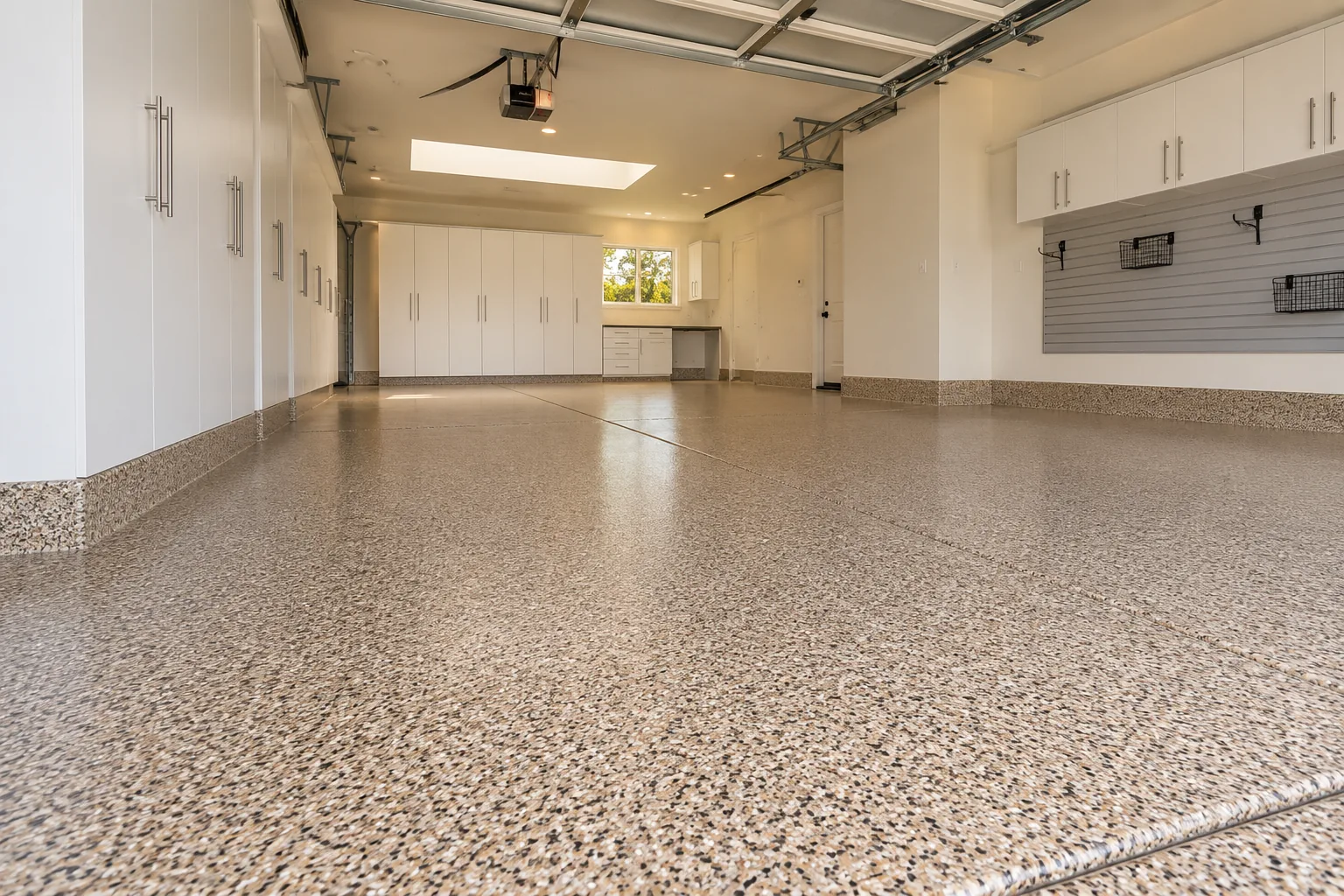
Urethane cement is the system we put in most commercial kitchens, because it takes thermal shock that cracks and lifts epoxy. A pot of boiling water dumped at the dish pit swings the slab temperature fast, and urethane cement moves with it, the reason Oscar's washdown and prep room, about 1,500 sq ft, in Eastvale runs the same chemistry. Epoxy still has a place in dry storage and front-of-house corridors, where a 100% solids epoxy typically allows walk-on in an estimated 18 to 24 hours and a hard, clean floor at a lower cost.
A kitchen floor has to grip when it is wet and greasy, so every system we install carries a broadcast texture and grit in the topcoat. Smooth epoxy is the wrong floor for a cook line, so El Sobrante and San Antonio Heights cafes get the same textured build as a busy Riverside kitchen. We set the texture coarser at the fryers, the dish pit and the walk-in door, and finer at the pass and the server station, so the floor still mops clean where staff walk fastest.
Phased by section, high-build epoxy or quartz, cove and striping as needed
Failed DIY paint or peeling epoxy ground off before the new system
Investment and duration figures are estimates. Your written quote sets the final price and schedule.
Commercial kitchen floors in Riverside County are typically budgeted per section, at an estimated $5,500 to $14,000 for each 1,000 to 2,000 sq ft, and tile removal, drain slope and cove footage move the price most. Elaine's kitchen and dish area came in at an estimated $9,200 to $13,800 including tile removal and the coved base.
| Job type | Est. investment | Est. duration on site |
|---|---|---|
| Commercial or multi-car facility floor | Est. $5,500 to $14,000 per section (1,000 to 2,000 sq ft) | Est. 3 to 5 days |
| Restaurant kitchen and dish area, urethane cement with cove | Est. $9,200 to $13,800 | Est. 3 to 5 days |
| Old coating removal by diamond grinding, inside the floor job | Est. $800 to $3,000 per floor (400 to 600 sq ft) | Est. 4 to 8 hours |
Kitchen figures here are budgetary estimates and are subject to change. Your written quote, confirmed on bid after the walk-through and a check of the drains and the slab under the old tile, sets the final price and the closing schedule, and it depends on the square footage, the linear feet of cove and how much slope the floor needs.
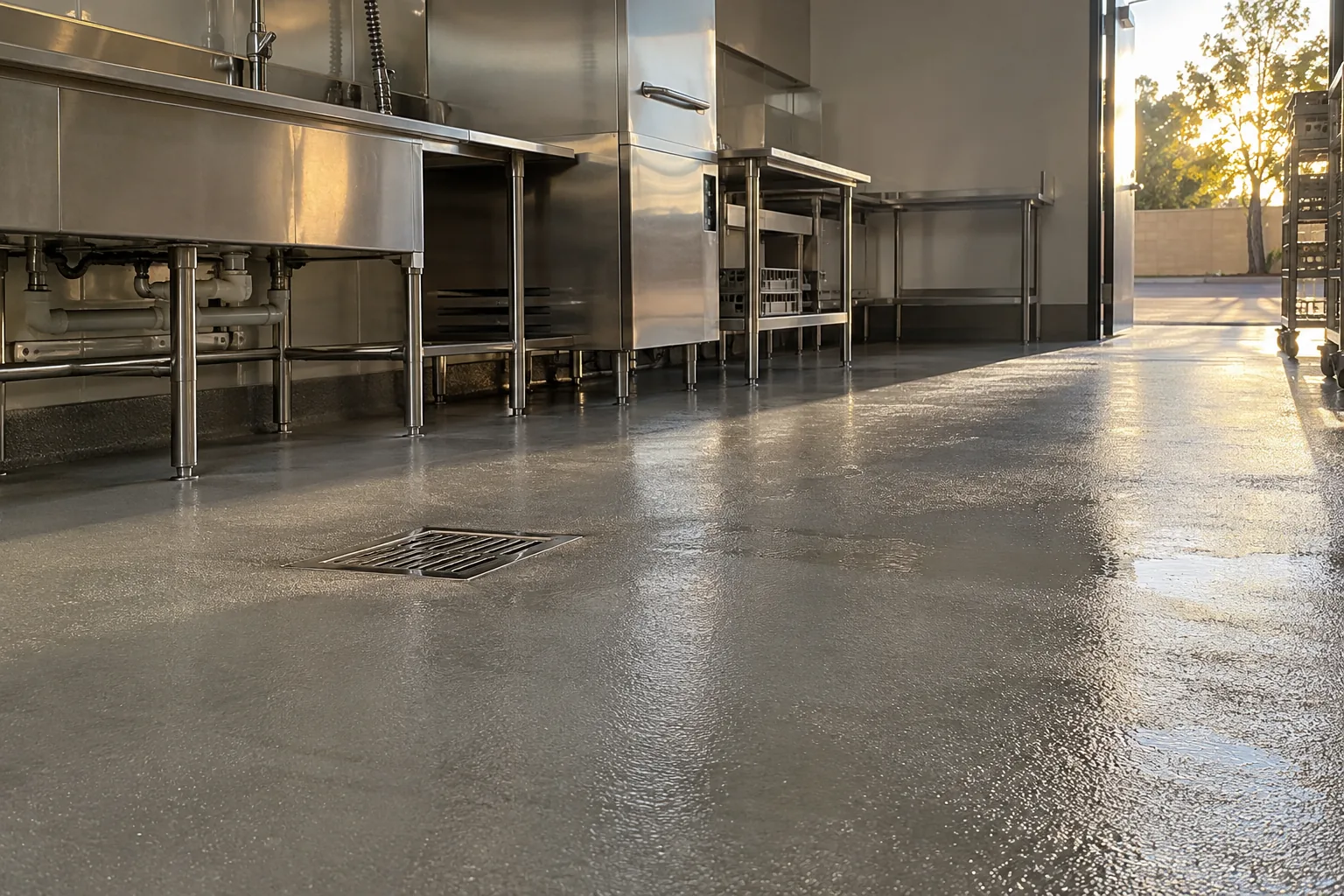
Elaine, tree-lined street north of Foothill Boulevard, Claremont
A restaurant kitchen with failing quarry tile, broken grout and a standing-water corner by the dish pit
Investment and duration figures are estimates. Your written quote sets the final price and schedule.
Elaine owns a restaurant on a tree-lined street north of Foothill Boulevard in Claremont, and her floor had become a liability. We recommended removing the tile, sloping the floor to the drain, then urethane cement with a coved base, done Sunday to Tuesday. The restaurant kitchen and dish area, about 1,100 sq ft, in urethane cement slurry, integral cove, quartz texture, came in at an estimated $9,200 to $13,800 over an estimated 3 to 5 days. The new kitchen floor takes hot-water washdowns and passed its next health inspection.
A kitchen floor is planned around the days the restaurant can go dark, and most installs run an estimated 3 to 5 days from tear-out to the last topcoat. Grinding off an old coating or mortar bed typically takes an estimated 4 to 8 hours of that window. We start after the last service, pull tile and grind the first night, build the floor and cove over the next days, and hand back a floor that is ready for equipment to roll back in. Franchise operators in Eastvale and Norco often close a unit over a slow Sunday to Tuesday stretch, the same window Elaine used in Claremont.
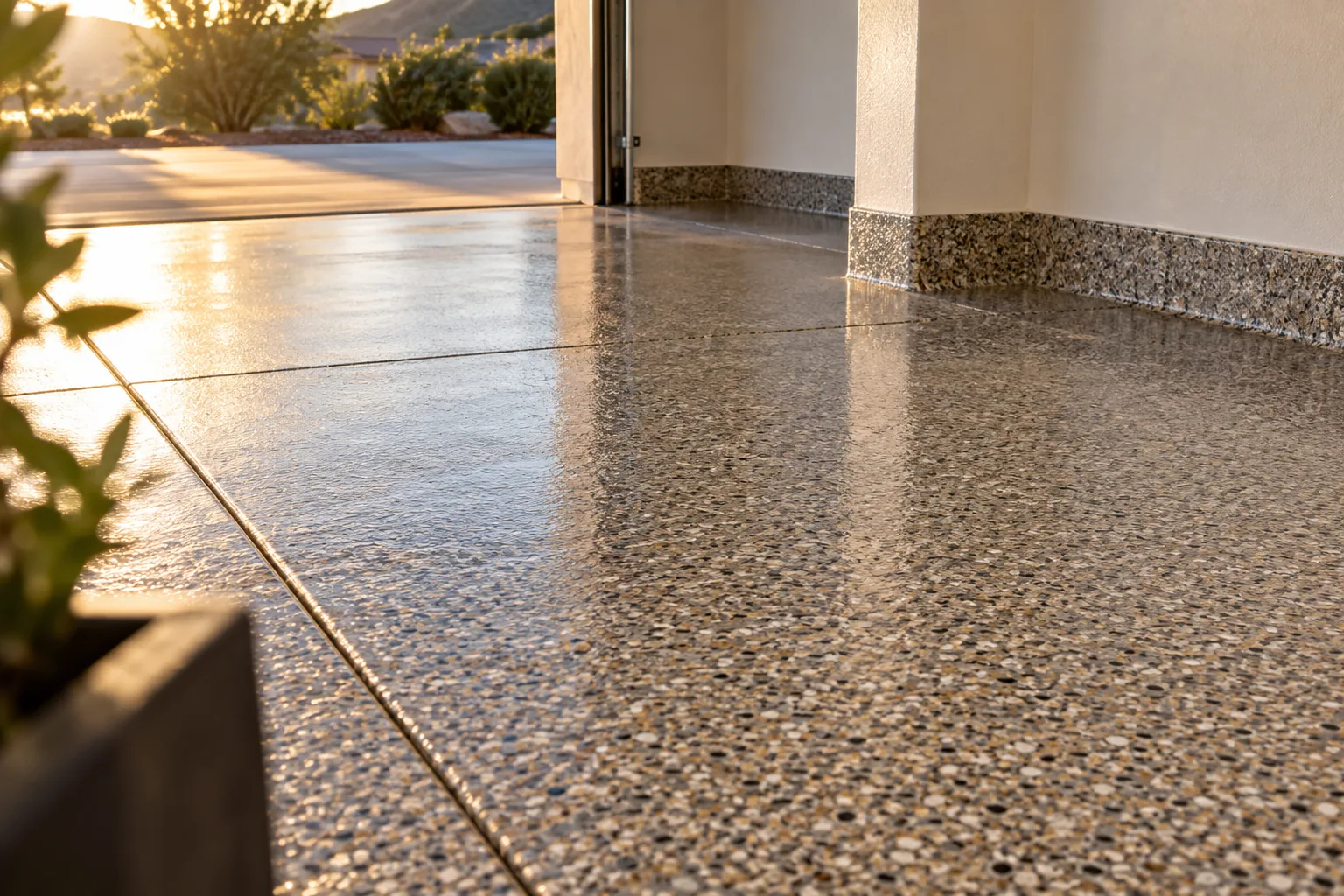
A kitchen floor job follows five steps, the same in a Woodcrest cafe as in a Riverside hospital kitchen.
Operators choose us because 12 years of restaurant closures taught us to plan the floor around the closing days, and the crew that tears out the tile is the crew that trowels the cove. Our owner reads every moisture test himself, and coating makers' product warranties, typically 5 to 10 years on professionally installed systems, pass through to you in writing alongside our own workmanship warranty.
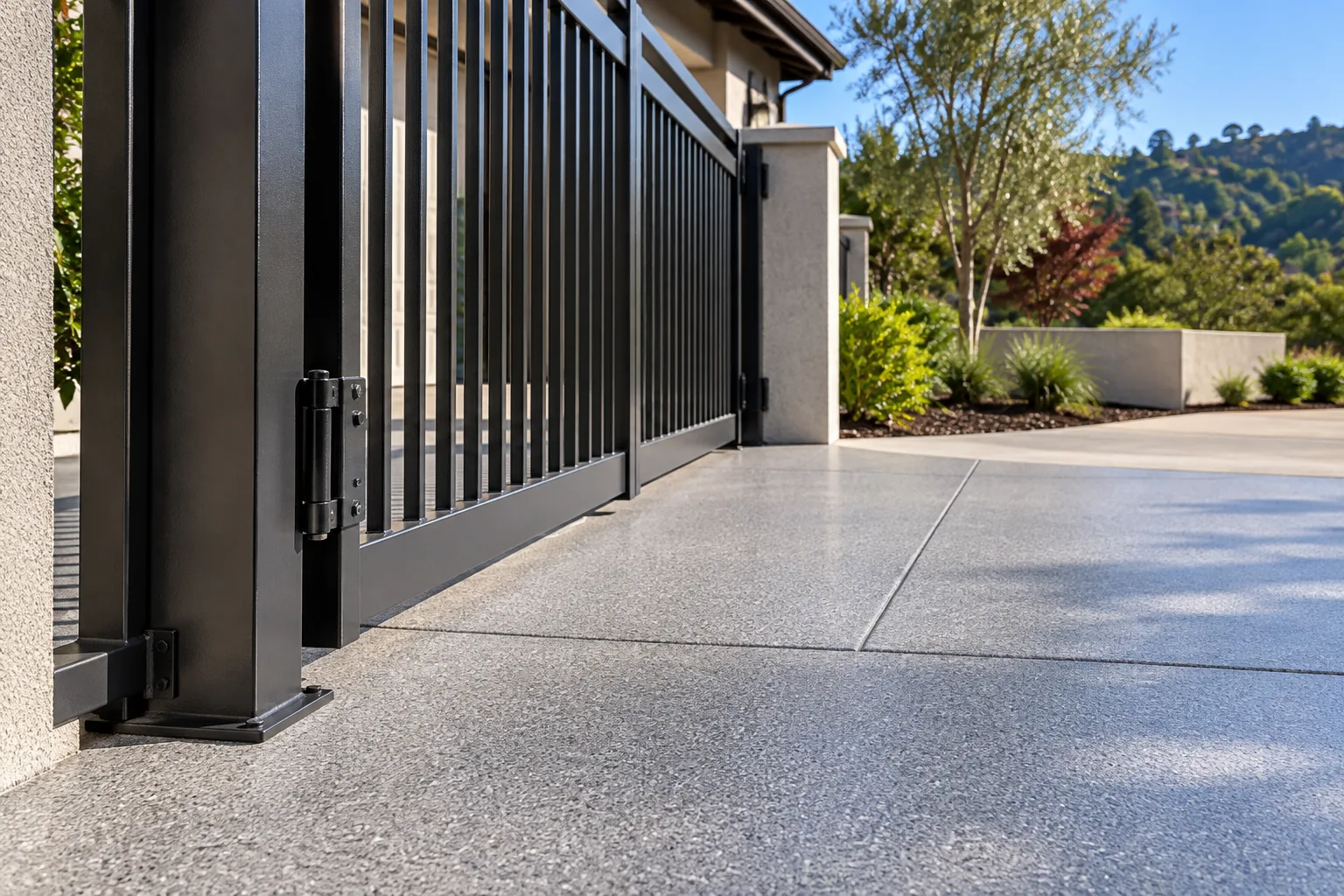
We bid restaurant and food service kitchens across a 45-mile radius of Riverside, from the Mission Inn district downtown to school and hospital kitchens across the county. Claremont, Diamond Bar and San Antonio Heights bring restaurant rows and college dining near the foothills. Eastvale, Norco, El Sobrante and Woodcrest bring franchise units in new shopping centers, while Yorba Linda, Villa Park and North Tustin bring Orange County restaurants and country club kitchens.
Kitchens sit inside our wider commercial and industrial floor coating work. Food producers and packers read our urethane cement floors for food and beverage plants, clinic owners compare seamless medical and dental floors, and distributors book warehouse and distribution center coatings. If the kitchen is in your house, start at our Riverside floor coating home page.

Urethane cement with an integral cove base is the best floor for most kitchens, the system on Elaine's Claremont kitchen, because it takes hot water and grease without cracking.
We remove failing tile, as in Claremont, because loose tile and broken grout under a new floor will crack it from below.
Most kitchens close an estimated 3 to 5 days, and we start after the last service so the restaurant loses as few covers as possible.
No, kitchens from Villa Park to North Tustin get a broadcast texture rated 0.60 to 0.85 DCOF with aluminum oxide or polymer grit in the clear coat.
Kitchen floors are typically an estimated $5,500 to $14,000 per 1,000 to 2,000 sq ft section, and your written quote sets the final price.
Yes, an integral cove carries the floor up the wall in one piece, the detail inspectors look at in Diamond Bar, Riverside and Yorba Linda kitchens.
Yes, we slope the floor to the drain before coating, as we did at the Claremont dish pit, so water runs off instead of pooling.
Request a bid with your kitchen square footage, current floor, drain layout and the days you can close, and we will schedule the walk-through after service.
Start to finish
We walk the slab with you, map cracks, joints and old coatings, and take moisture readings before a system is named.
The system, every coat and its thickness, the colors and the cure and return-to-service times arrive in writing.
The slab is diamond ground with dust control, cracks and joints are filled, and each coat goes down inside its recoat window.
We walk the cured floor with you, go over the care notes and tell you when cars or equipment can come back.
Where we work
Call us or send plans, square footage or a walk date, and we will set a site walk and return a written bid.
Calls only, we do not receive text messages.