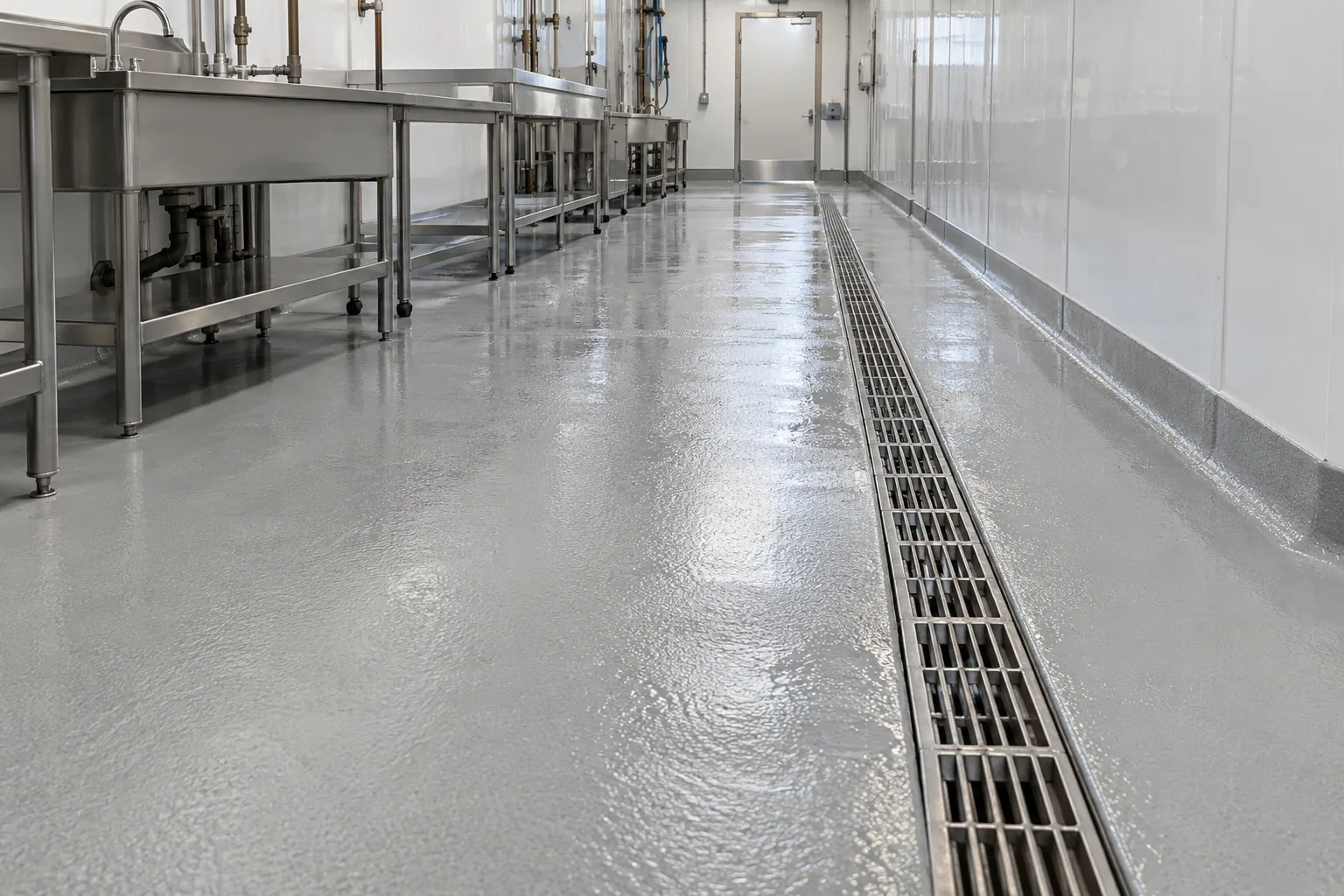
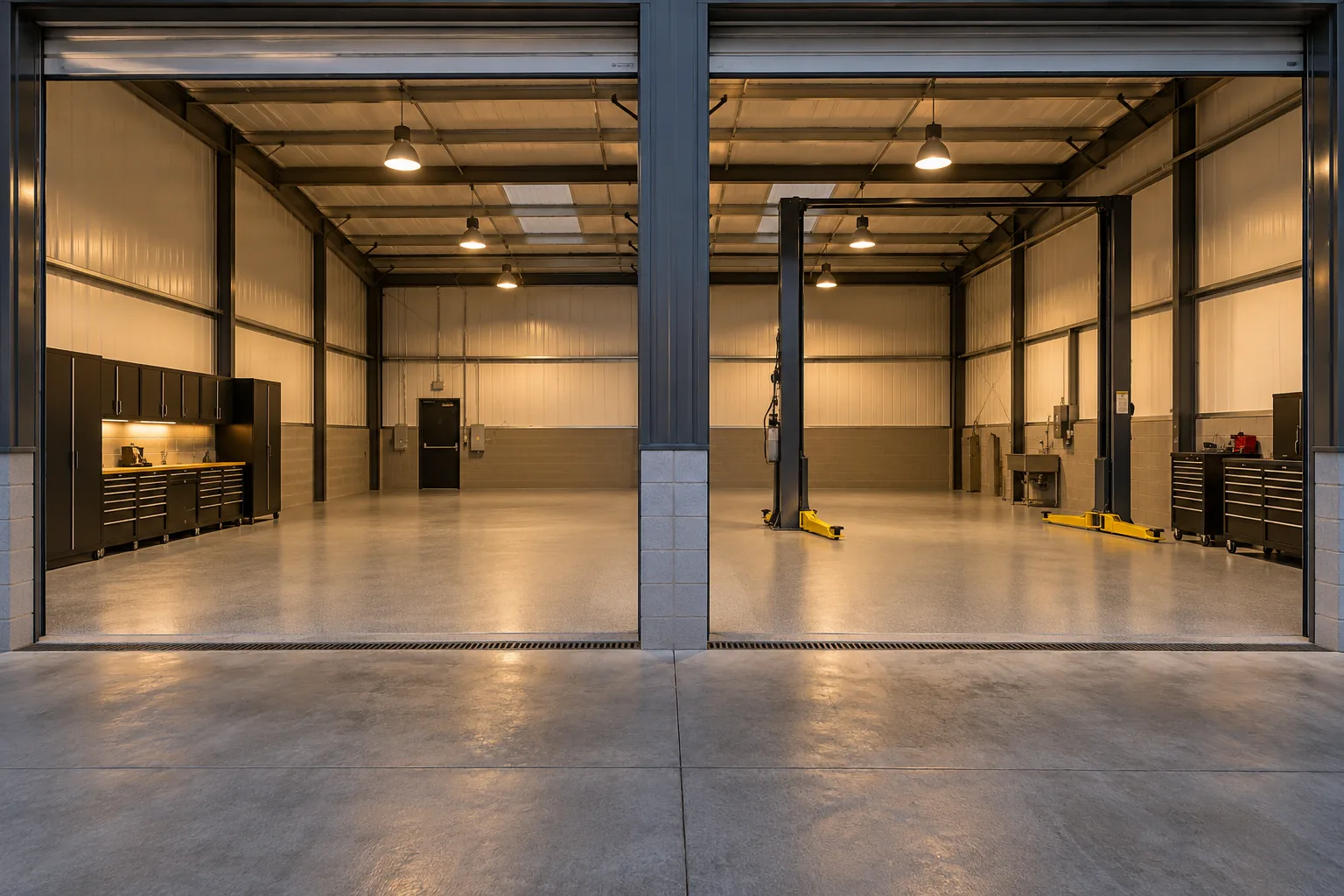
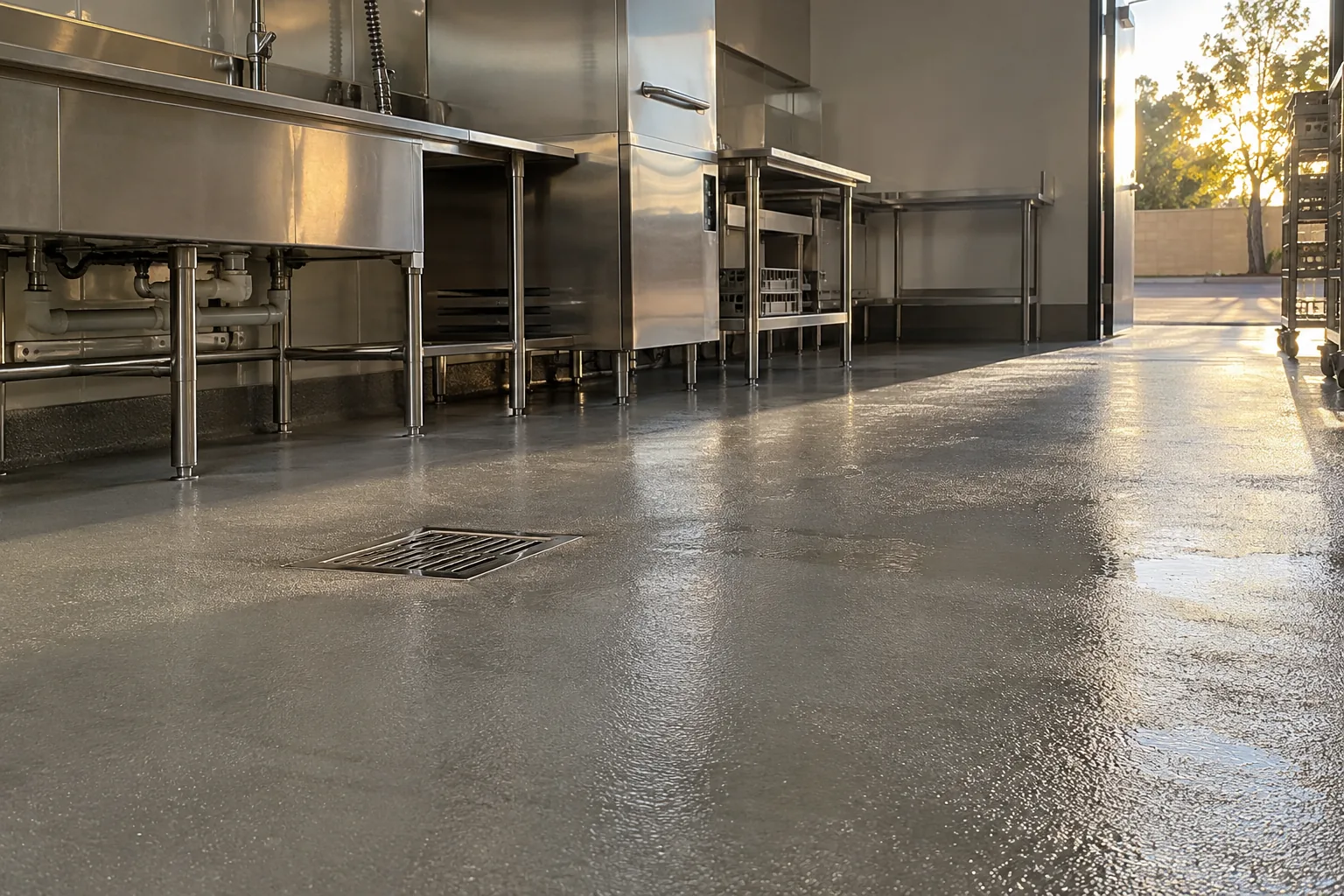
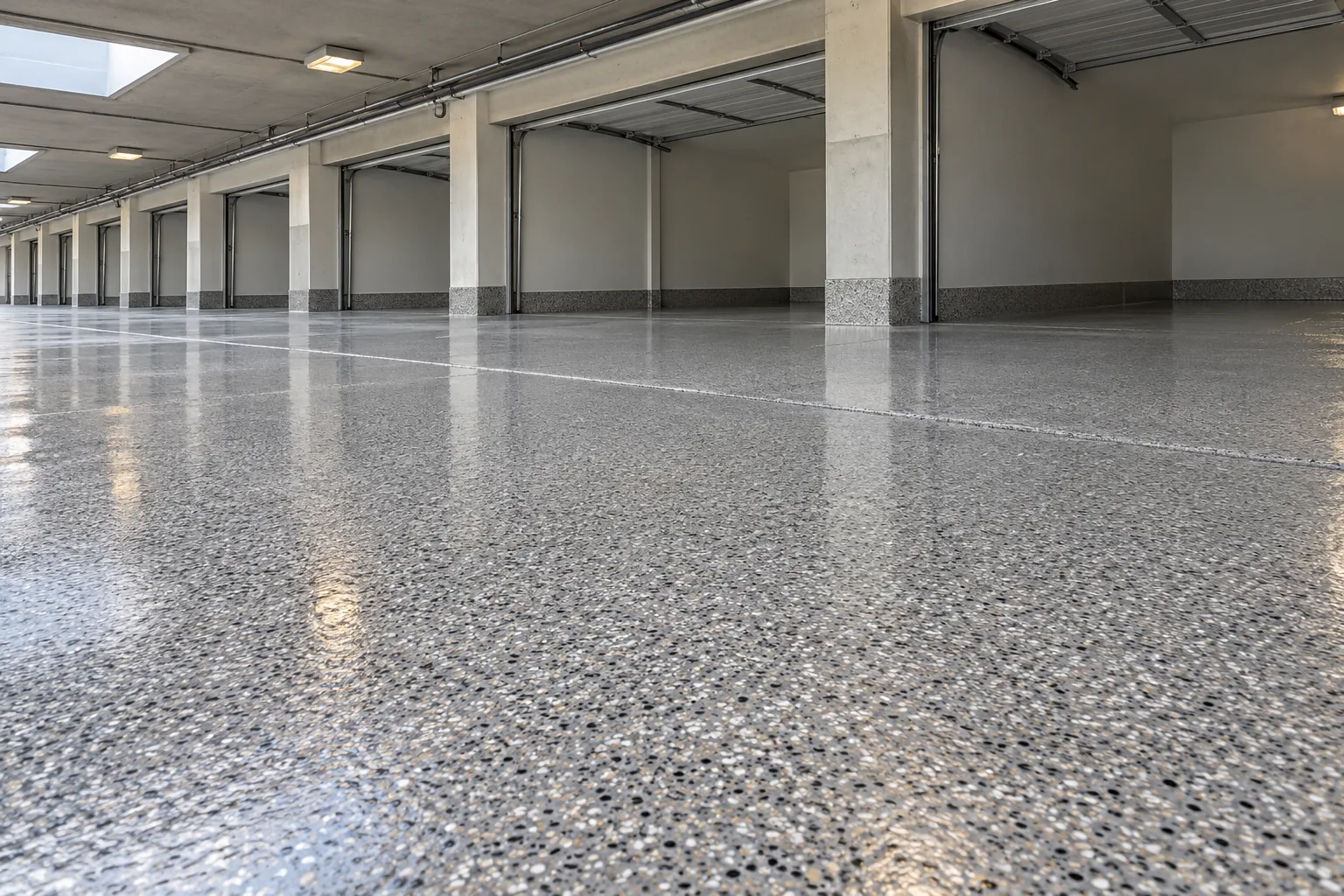
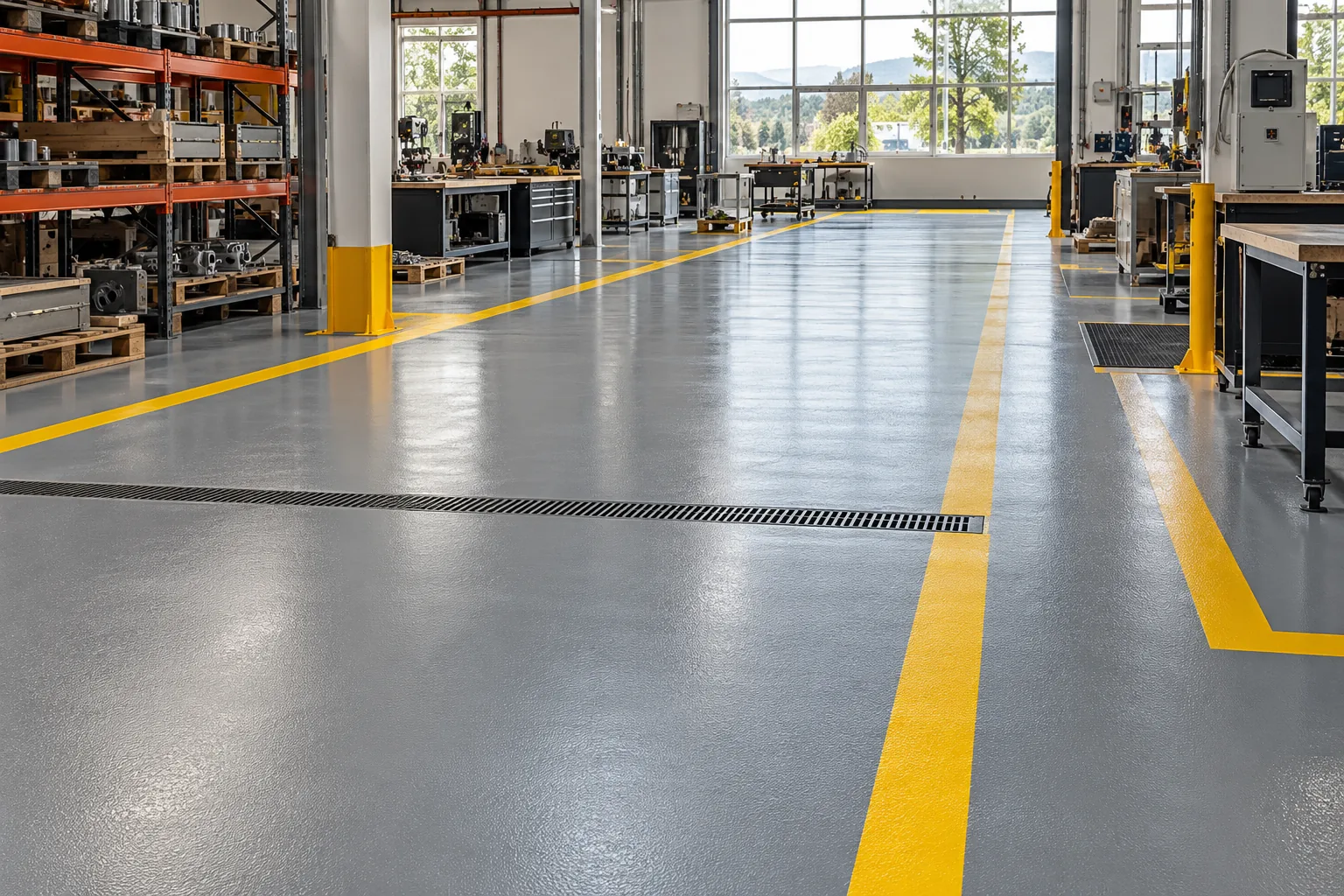
Commercial or multi-car facility floor
- Est. investment
- $5,500 to $14,000 per section (1,000 to 2,000 sq ft)
- Est. duration
- 3 to 5 days
Phased by section, high-build epoxy or quartz, cove and striping as needed
Riverside Epoxy Flooring Group is the Inland Empire's warehouse floor coating crew, working with logistics operators, tilt-up building owners and facility managers on pick and pack zones, forklift aisles and dock aprons. We take on floors from a single 1,000 sq ft staging zone to pick areas of 3,600 sq ft split into sections, and larger buildings in as many phases as the operator needs.
Request a bid or a site walk
Our crews work occupied distribution buildings, phasing each zone around shipping waves and shifts so trucks keep loading and stock keeps moving. Backed by 12 years in business, we have finished over 1,187 projects, and operator references come with every bid, from one racked bay to striped aisles across a working building.
From joint mapping and moisture readings to the striping layout and final walk with your operations lead, our team handles the parts of a warehouse job that decide whether it finishes on schedule. Serving Riverside, Eastvale, Norco and Woodcrest, we hold the operator's schedule, work nights and weekends between shipping waves, and hand each zone back ready for forklifts.
Request a bid with your square footage, your racking plan and the hours the dock can give up.
What you can hold us to
Forklift traffic grinds a warehouse slab from the joints outward, because hard solid tires carrying one to five tons hit every saw cut like a curb, from Riverside's industrial parks to the yards around Norco. Most early tilt-up buildings were warehouses, and their panels were cast flat on the floor slab with a release agent sprayed so they would lift off, so we test the surface before any coating is chosen. Unsealed concrete also dusts under wheels, which is how Hector's pick and pack zone in Eastvale kept shedding dust onto stock.
Joints fail before the field of the slab, so joint repair is its own line in every warehouse bid we write, whether the building sits in Eastvale or El Sobrante. Spalled saw cuts and construction joints are cut back and rebuilt, then refilled with a semi-rigid epoxy or polyurea filler of Shore A80 or harder, the hardness ACI 302 and 360 guidance points to for hard wheels. Some separation at the joint edge is normal as the slab moves, and it is refilled with a low-viscosity filler rather than torn out.
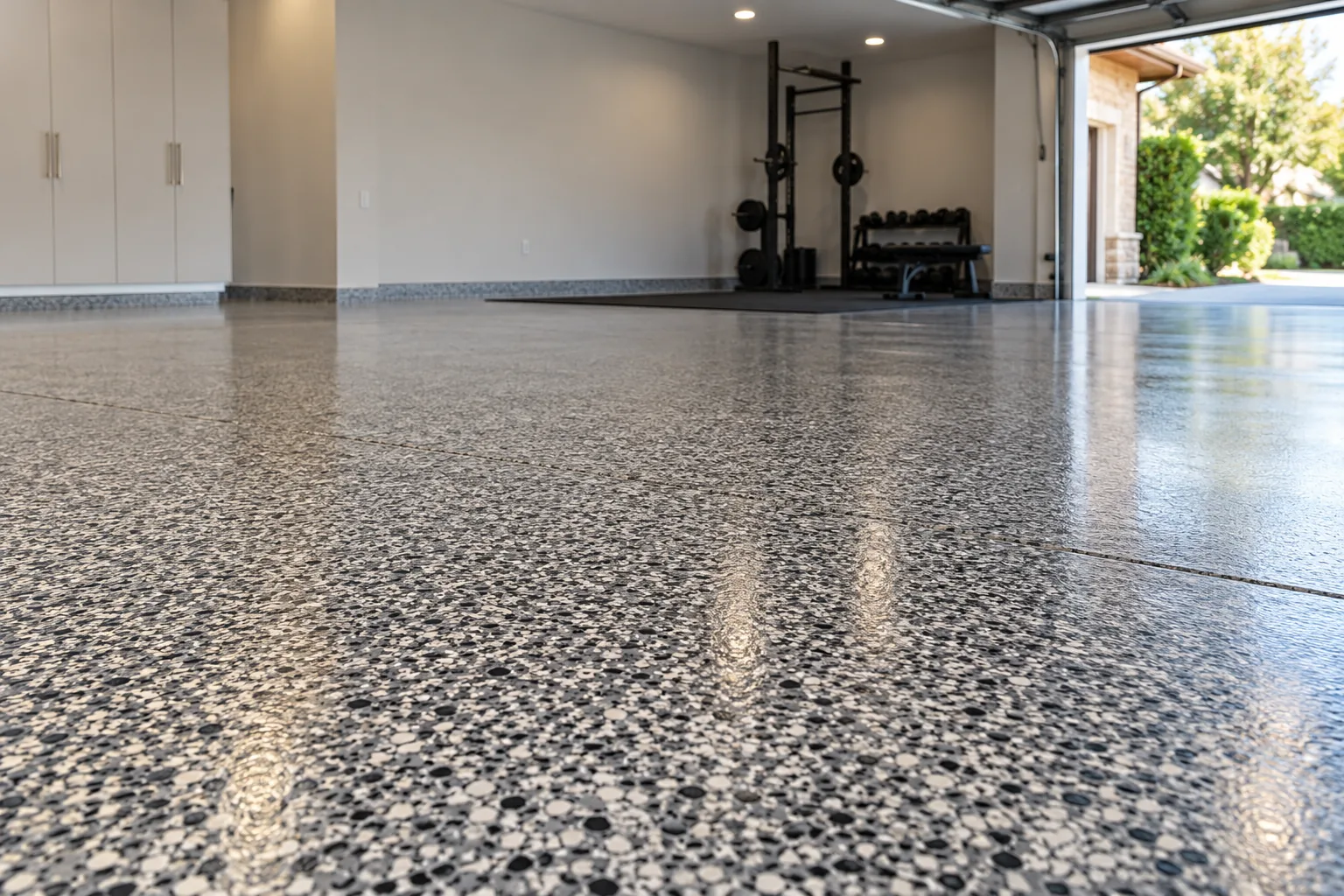
The right answer depends on what the floor carries, and after 12 years and 1,187 projects our rule is simple: a densified, polished slab suits clean dry storage, while a coating suits zones with spills, dust complaints or marked lanes. Lithium or silicate densifiers harden and dust-proof bare concrete and leave it easy to clean with water. A high-build 100% solids epoxy, safety-yellow aisle striping is the system we use where pallets drag, batteries leak and the floor needs color for wayfinding.
| Option | Best for | Trade-off |
|---|---|---|
| Densify and polish | Dry racked storage, light traffic | No color lanes, stains soak in |
| High-build epoxy, 40 to 120 mils | Pick zones, charging areas, dusting slabs | Longer cure before forklifts return |
| Urethane cement | Cold storage, freezers and coolers | Heavier build and a higher price |
Freezer and cooler rooms get urethane cement rather than epoxy, as Oscar's washdown and prep room in a food distribution building did; our urethane cement page for food and cold storage plants explains why.
Phased by section, high-build epoxy or quartz, cove and striping as needed
Failed DIY paint or peeling epoxy ground off before the new system
Investment and duration figures are estimates. Your written quote sets the final price and schedule.
Warehouse floors in Riverside are typically priced per zone, with an estimated $5,500 to $14,000 for each 1,000 to 2,000 sq ft section, and joint repair, slab dusting and striping length move the number most. A two-section pick area of about 3,600 sq ft typically lands at an estimated $14,000 to $24,000, which is where Hector's Eastvale floor came in.
| Zone type | Est. investment | Est. time per zone |
|---|---|---|
| One 1,000 to 2,000 sq ft aisle or staging section | Est. $5,500 to $14,000 | Est. 3 to 5 days |
| Two-section pick and pack zone, about 3,600 sq ft | Est. $14,000 to $24,000 | Est. 3 to 5 days |
| Old coating removal by diamond grinding inside the zone | Est. $800 to $3,000 per 400 to 600 sq ft | Est. 4 to 8 hours |
Joint filling is priced by the linear foot of saw cut after the joint survey, and striping by the lane layout the operator approves, as on Victor's assembly and parts area, about 3,400 sq ft, near the Santa Ana River.
These per-zone numbers are budgetary estimates for Riverside and are subject to change. Your written quote, confirmed on bid from the floor plan, the joint survey and the moisture readings, sets the final price and the zone schedule, and it depends on joint condition, coating thickness and how many zones the building runs.
Hector, logistics park on the city's edge, Eastvale
A dusting slab in a pick and pack zone that kept shedding concrete dust onto stock
Investment and duration figures are estimates. Your written quote sets the final price and schedule.
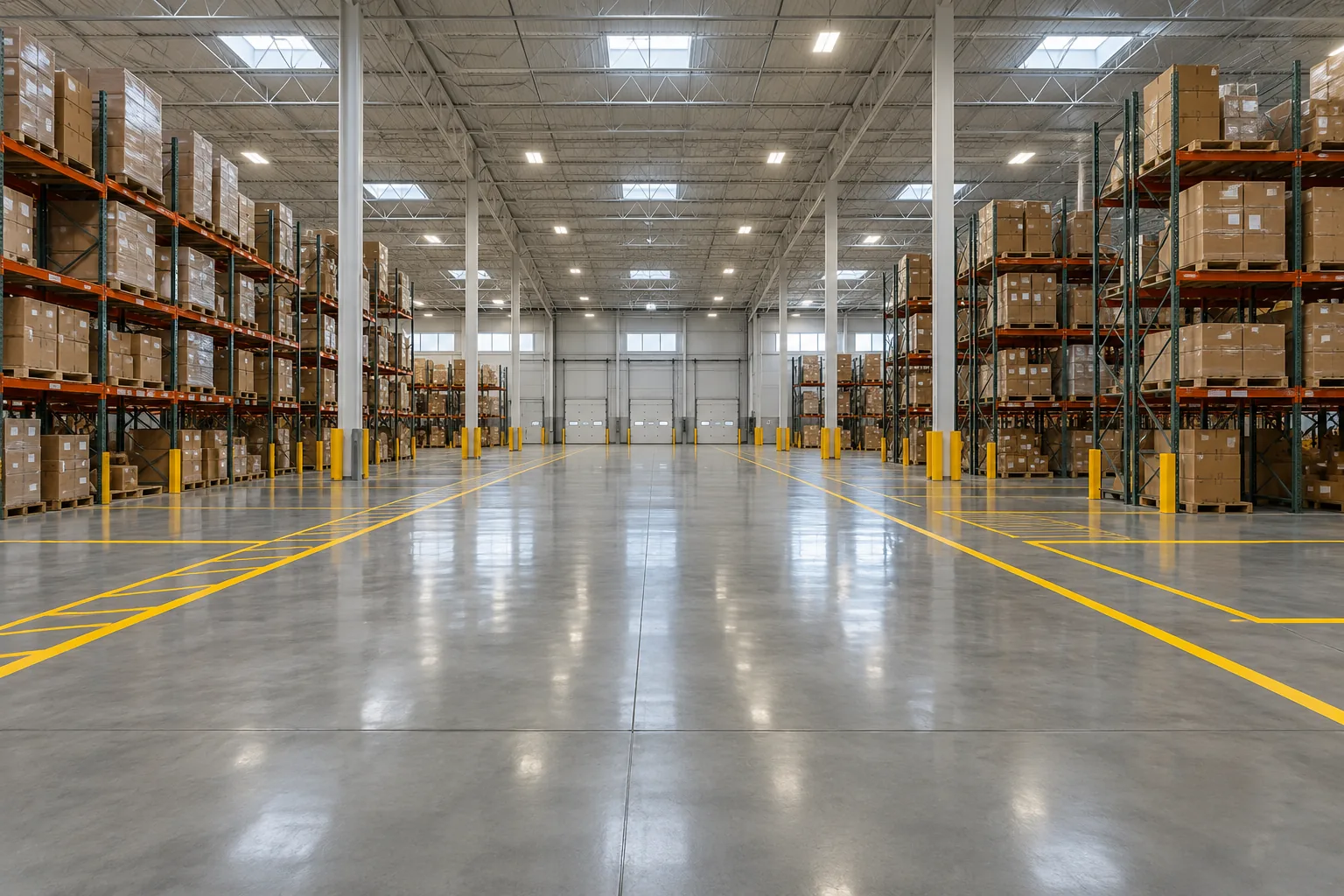
Hector's pick and pack zone, about 3,600 sq ft, in a logistics park on the city's edge no longer sheds dust onto the shelves, and its forklift lanes are marked in the coating itself. The problem was a dusting slab in a pick and pack zone that kept shedding concrete dust onto stock. We recommended grinding, a high-build epoxy and striped aisles, done in two sections so picking never stopped, with high-build 100% solids epoxy, safety-yellow aisle striping. The work came in at an estimated $14,000 to $24,000 over an estimated 3 to 5 days.
Aisle lines go into the coating as part of the floor, not painted on afterward, so they wear at the same rate as the lane in a Diamond Bar yard or a Yorba Linda depot. OSHA 1910.176 requires safe clearance where forklifts run and permanent aisles appropriately marked, and yellow is the caution color under 1910.144. A 1972 OSHA interpretation suggested lines of 2 to 6 inches in any color that defines the aisle, though OSHA notes that archived letter may not be current, so the operator's safety lead approves the final layout.
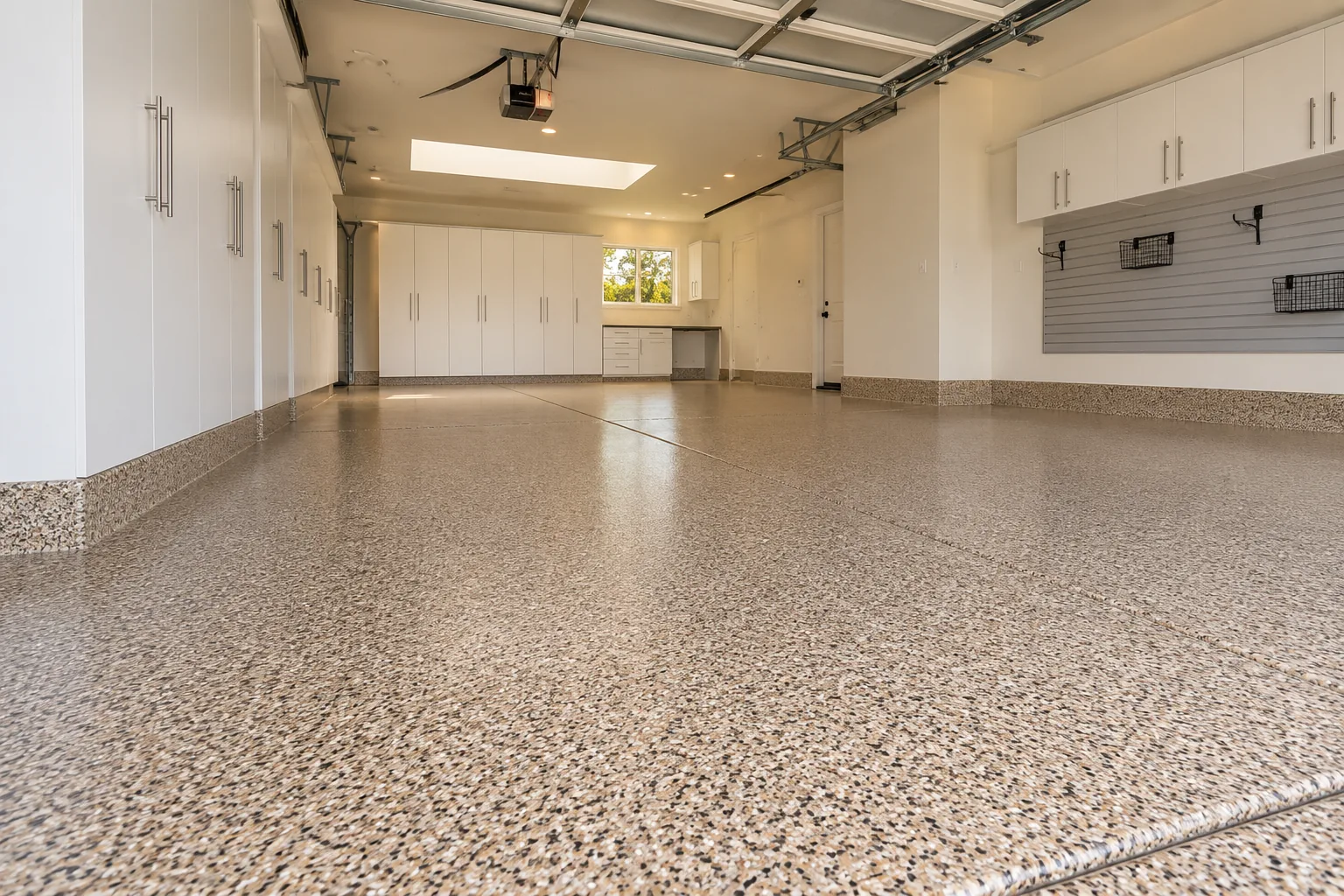
Distribution buildings are coated one zone at a time, with racks emptied or protected and the rest of the floor still shipping. Each section typically takes an estimated 3 to 5 days, and the zone order follows the operator's slow days, so inbound in Eastvale or Norco never waits on a wet floor. Grinding runs on industrial vacuums, and walk-on time on a polyaspartic topcoat is typically 4 to 8 hours, which lets supervisors check a zone before the next shift.
Operators choose us because the crew that surveys your joints fills and coats them, the zone schedule in the bid is the one we keep, and our owner still reads each moisture test from Villa Park to North Tustin. Every warehouse floor carries our 2-year workmanship warranty against peeling, delamination and hot-tire pickup in writing.
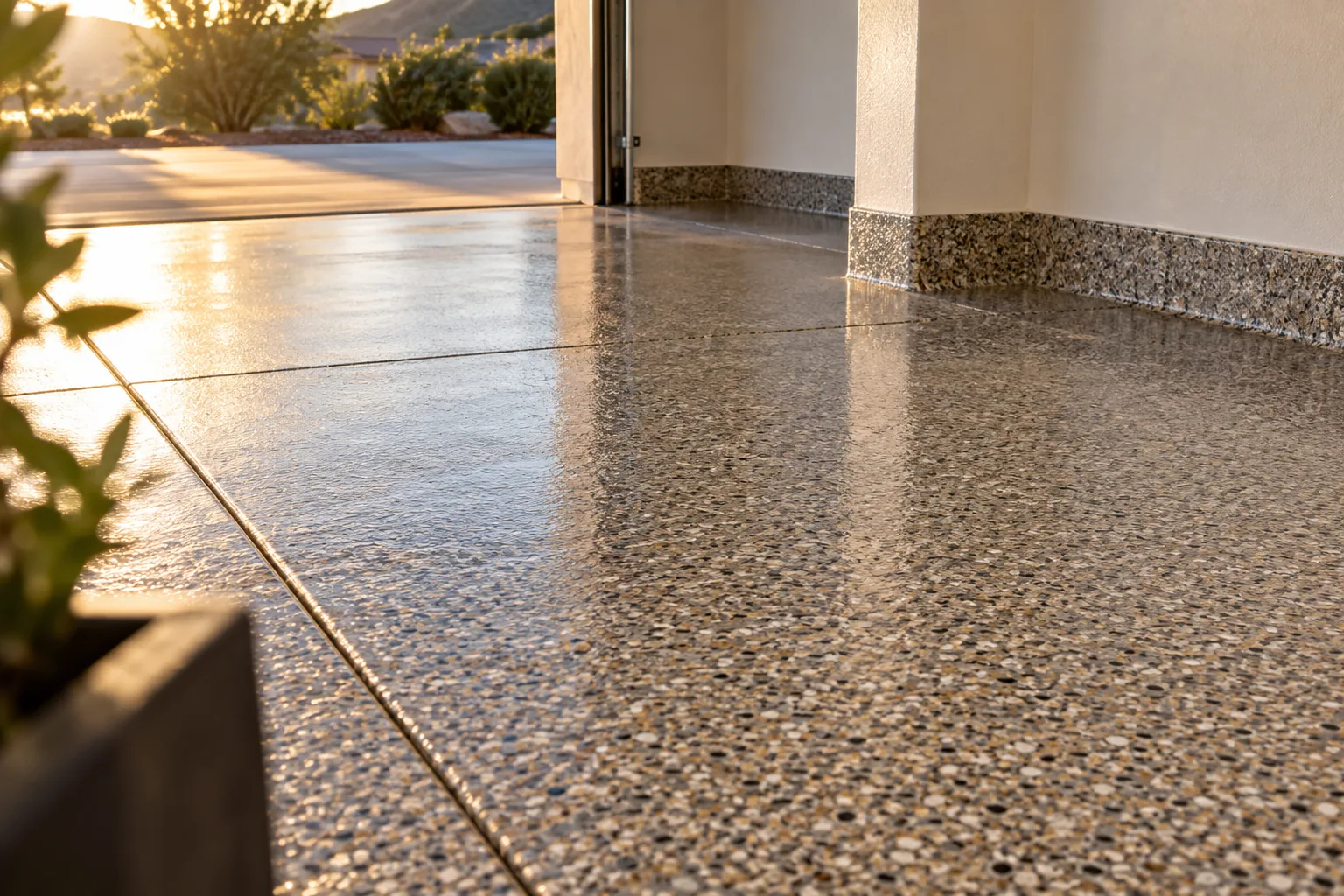
We bid warehouses across a 45-mile radius from Riverside, an Inland Empire market built on logistics, where low land prices and the highway and rail crossings drew shipping operations. Eastvale's logistics edge, Norco and Woodcrest yards, and buildings north toward Claremont and San Antonio Heights all sit inside that radius.
Plant floors with process chemicals belong on our manufacturing plant floor coatings page, fleet yards and service shops on auto shop and service bay floors, and owners comparing sectors start at commercial and industrial floor coatings. Homeowners can reach garage work from the epoxy floors home page.
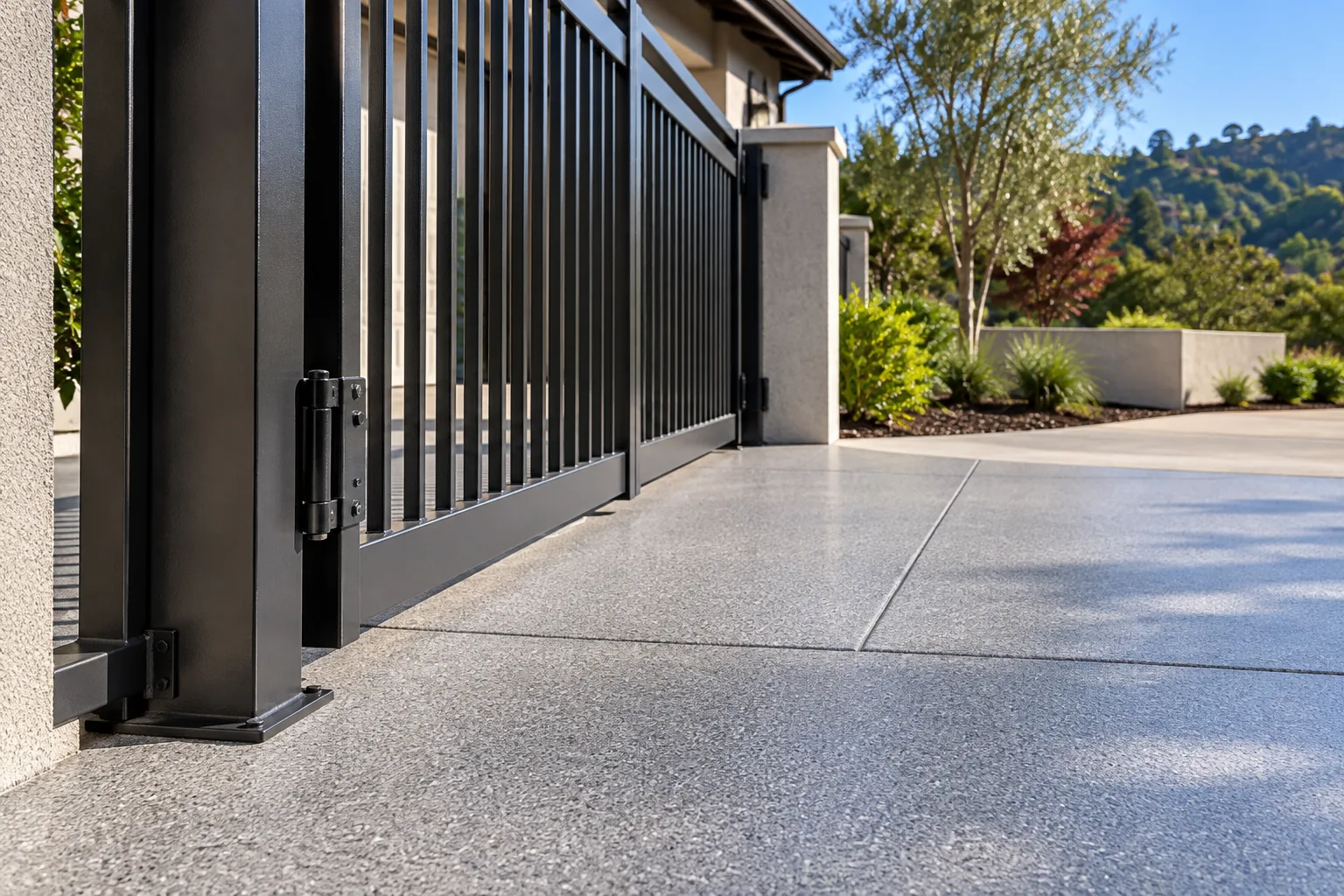
Yes, we coat in zones while the rest of the building ships, as in Hector's Eastvale pick area, done in two sections so picking never stopped.
Warehouse floors are priced per 1,000 to 2,000 sq ft zone, typically an estimated $5,500 to $14,000 each, plus joint repair by the foot, and your written bid sets the final price.
Densify dry racked storage and coat zones with spills or marked lanes; many Eastvale and Woodcrest buildings get both.
Yes, spalled joints are cut back, rebuilt and filled with a semi-rigid filler, then coated with high-build 100% solids epoxy, safety-yellow aisle striping where lanes run.
Loaded forklifts typically wait 72 to 96 hours on 100% solids epoxy, and that window is written into the zone schedule.
Yes, aisle lines and walkways are laid out with your safety lead and built into the coating, as in the pick and pack zone, about 3,600 sq ft, at Hector's building.
Every floor carries our 2-year workmanship warranty, and the coating maker's product warranty, typically 5 to 10 years on professionally installed systems, passes to you in writing.
Request a bid with your square footage, the racking and lane plan and your slow shipping days, and we will walk the joints with you.
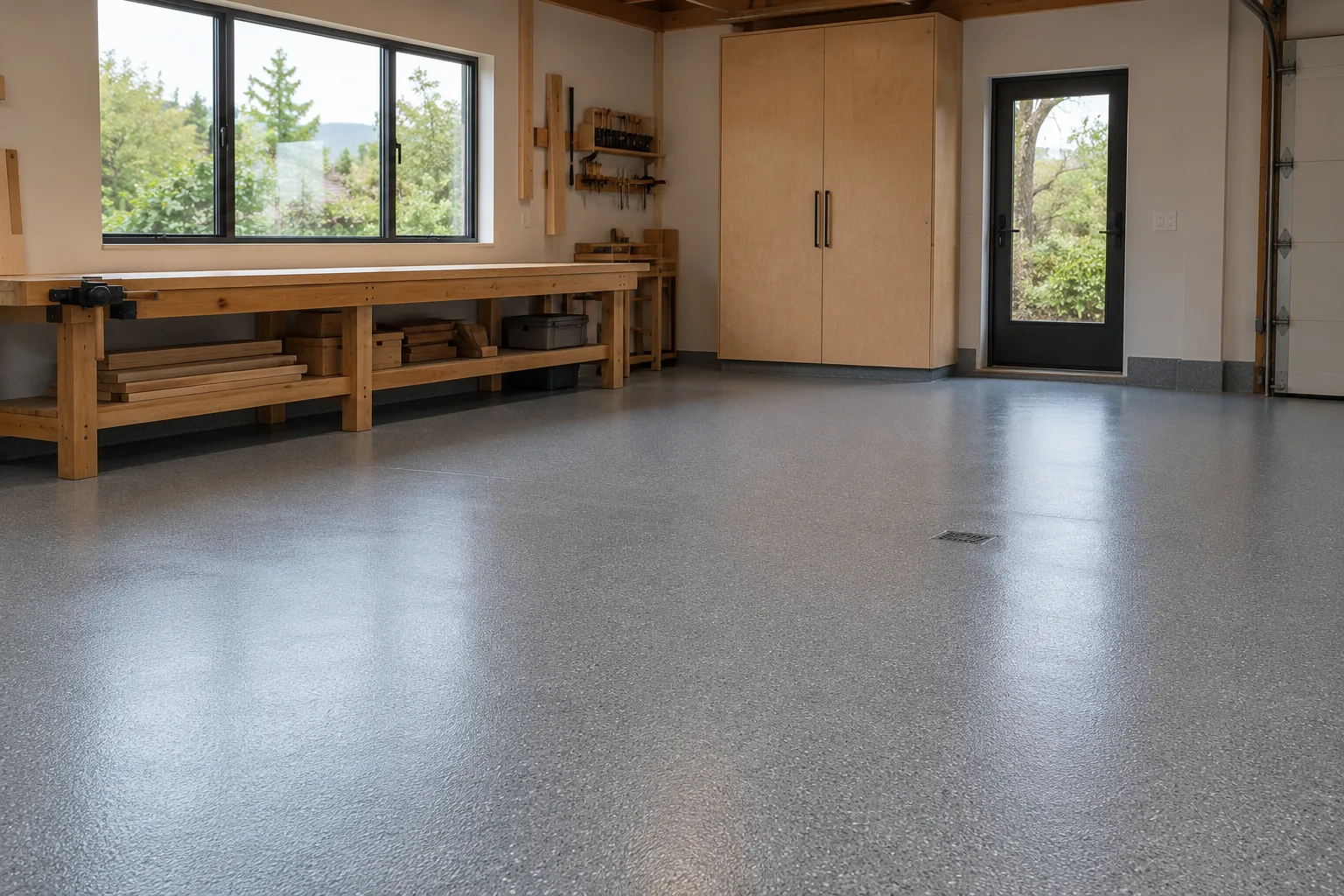
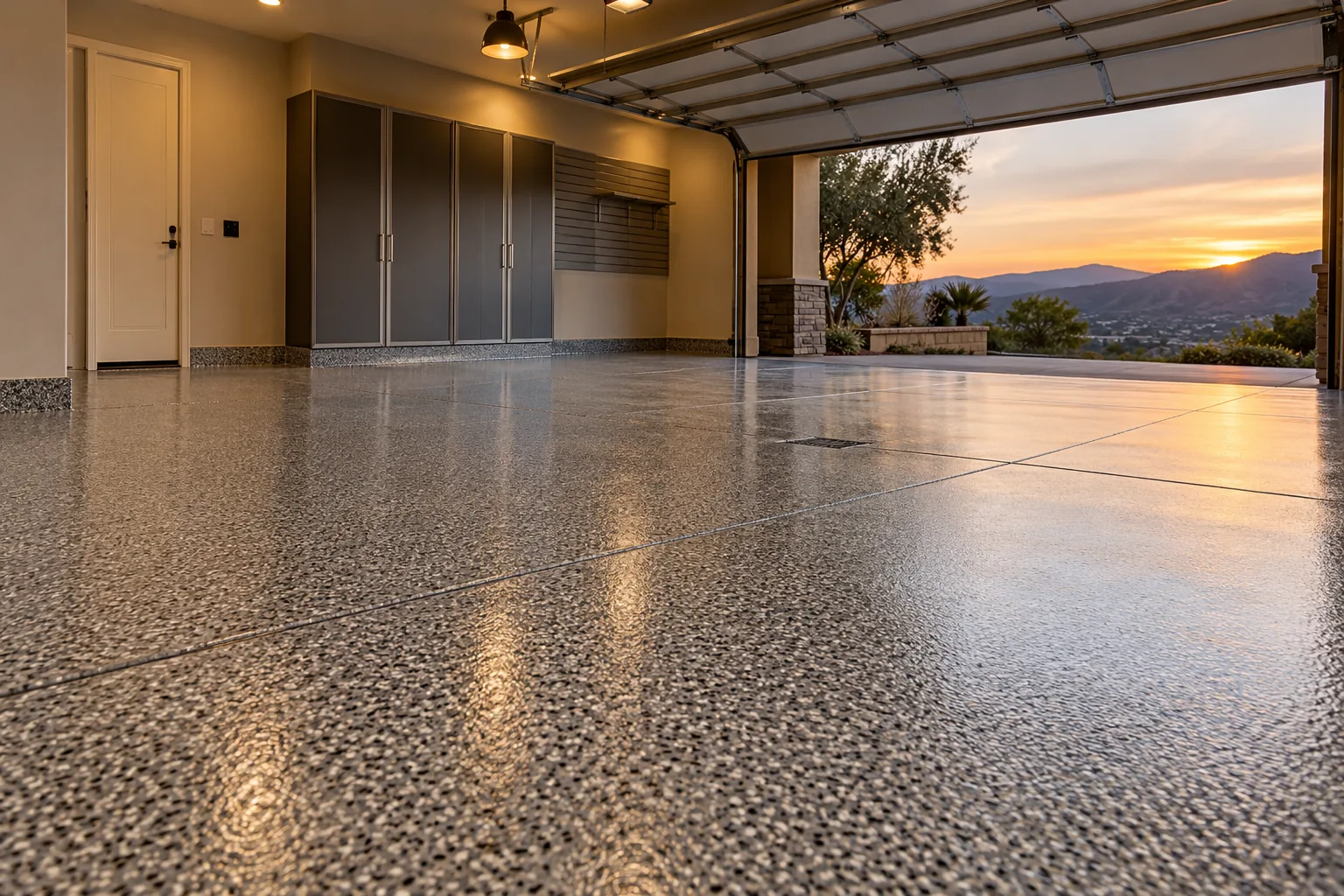
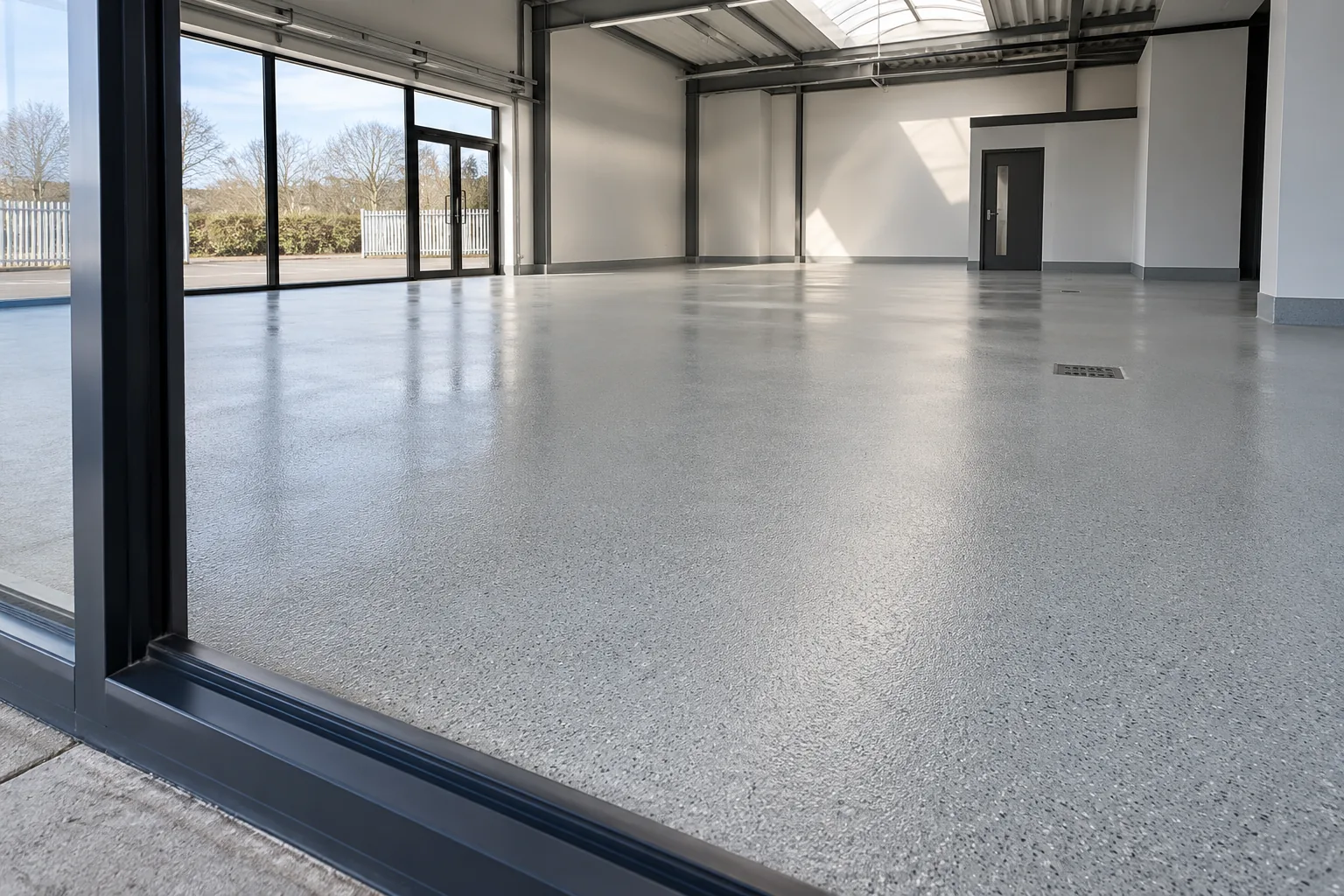
Slide the handle. Same space and camera: only the floor changed.
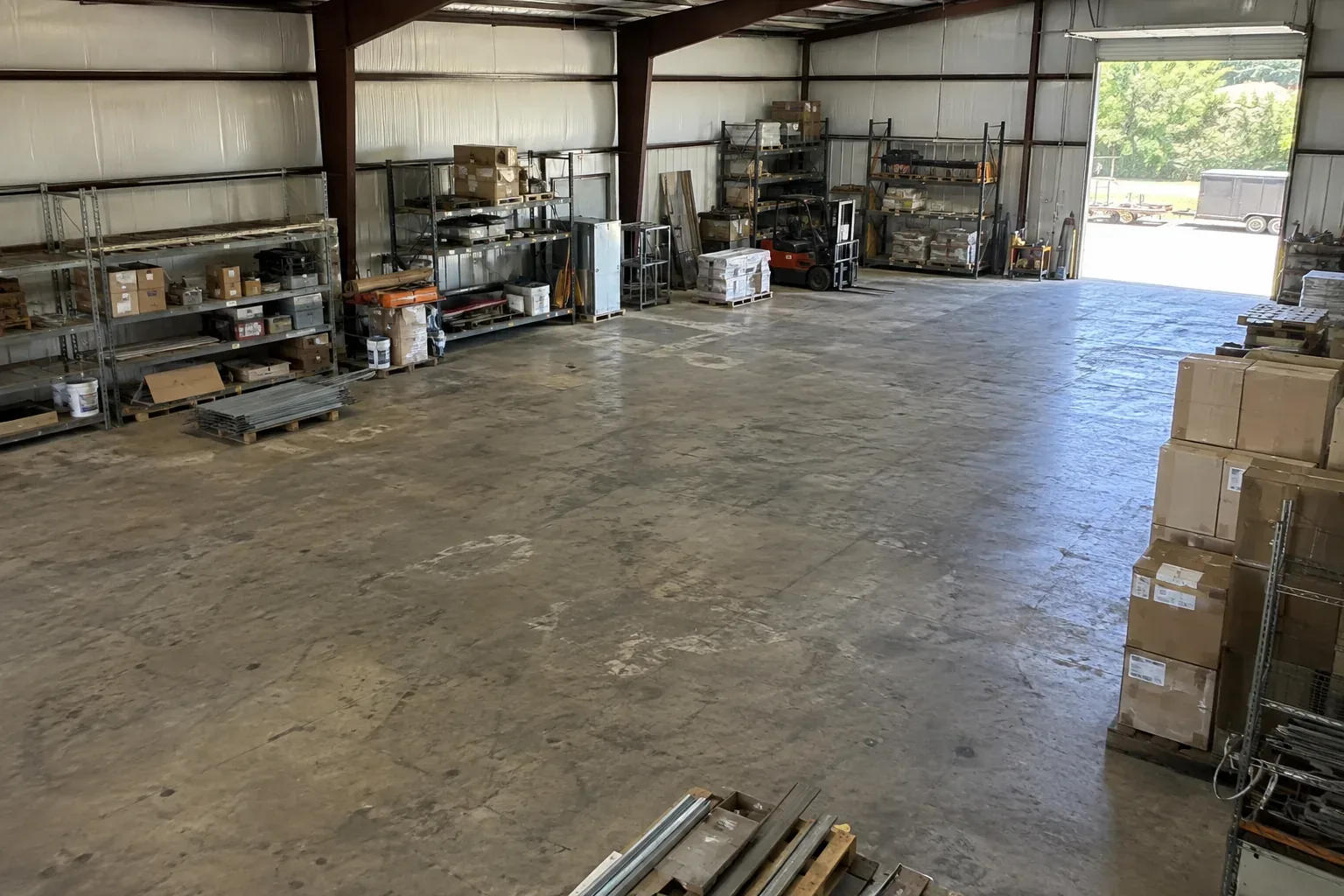
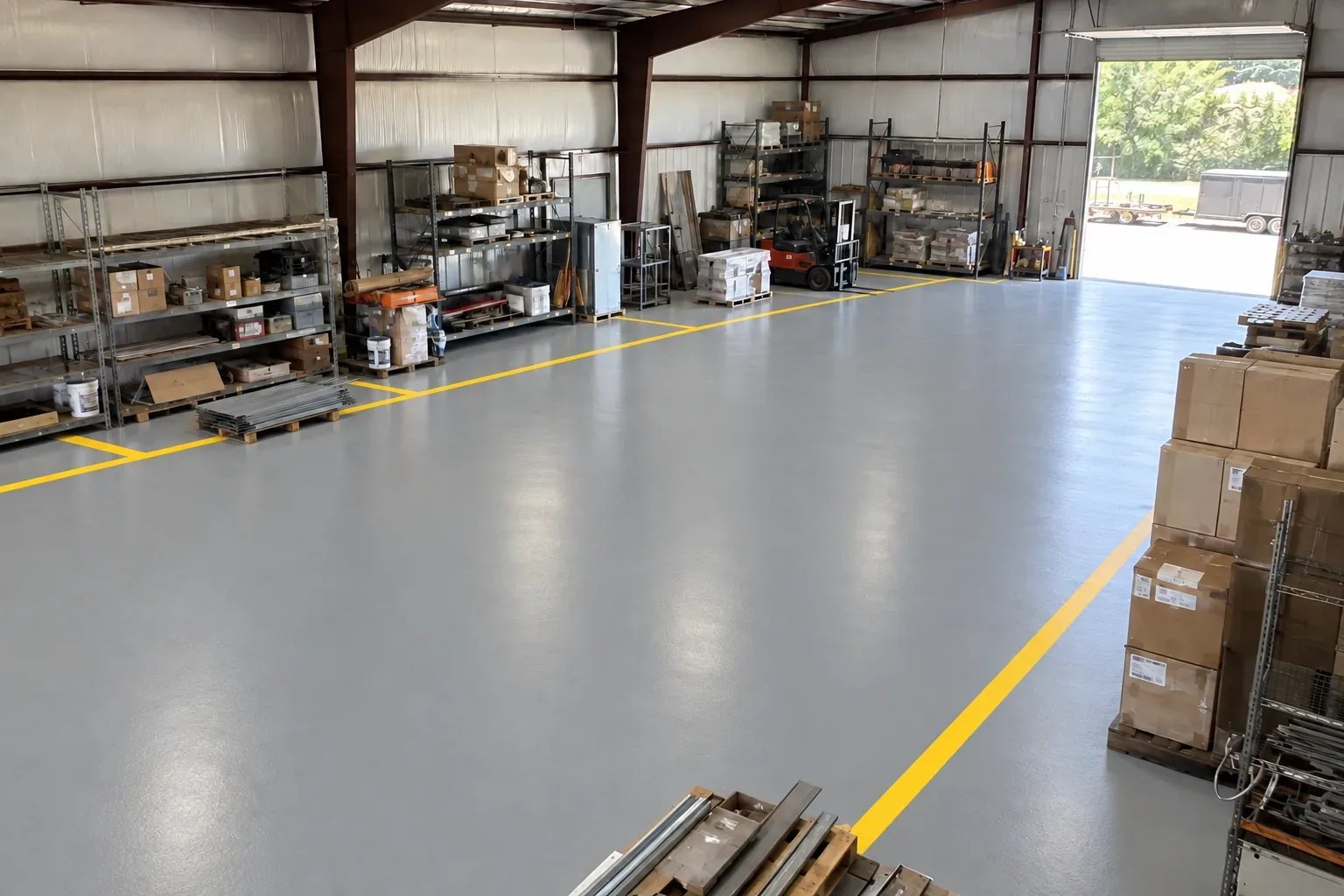 BeforeAfter
Start to finish
We walk the slab with you, map cracks, joints and old coatings, and take moisture readings before a system is named.
The system, every coat and its thickness, the colors and the cure and return-to-service times arrive in writing.
The slab is diamond ground with dust control, cracks and joints are filled, and each coat goes down inside its recoat window.
We walk the cured floor with you, go over the care notes and tell you when cars or equipment can come back.
Where we work
Call us or send plans, square footage or a walk date, and we will set a site walk and return a written bid.
Calls only, we do not receive text messages.