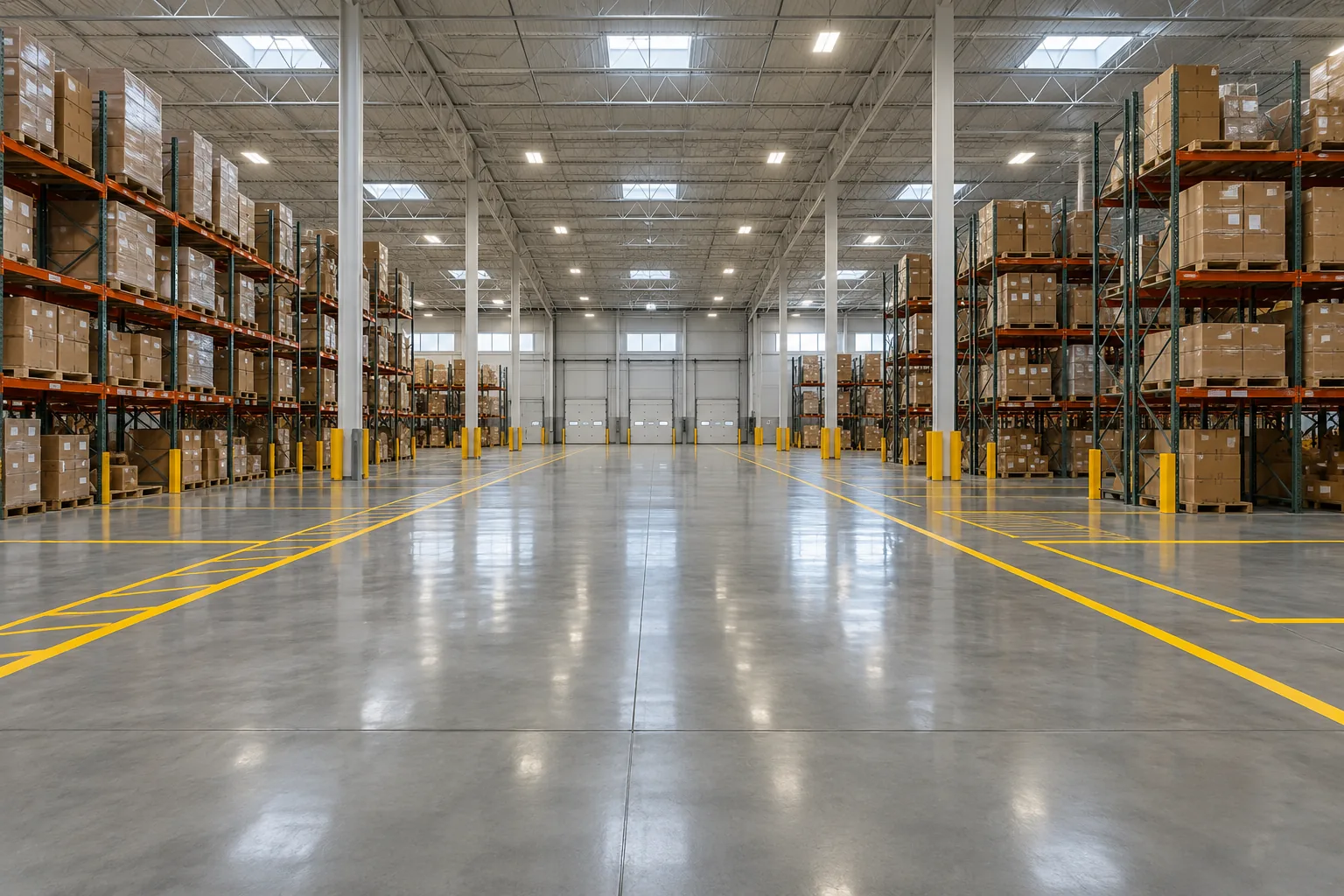
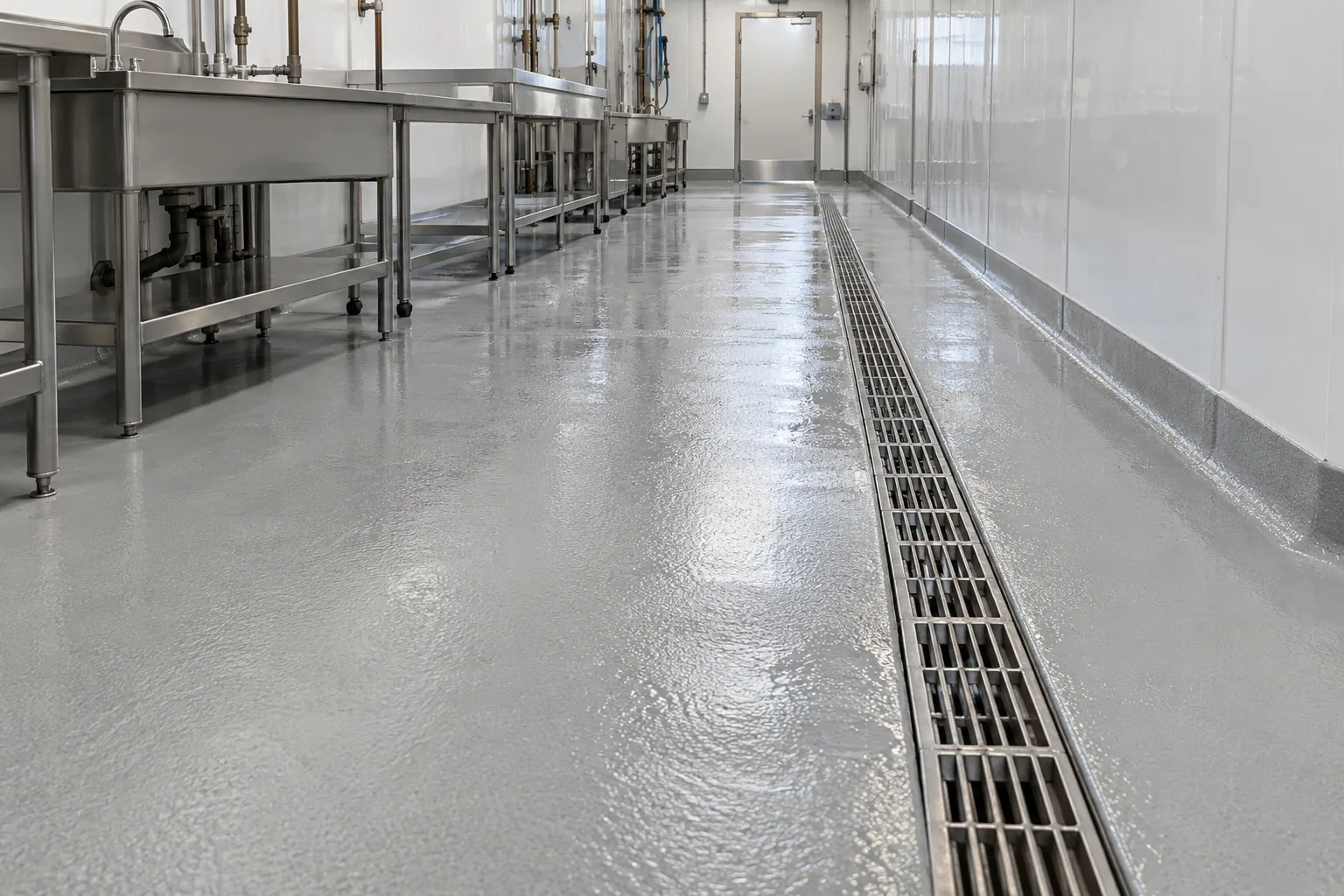
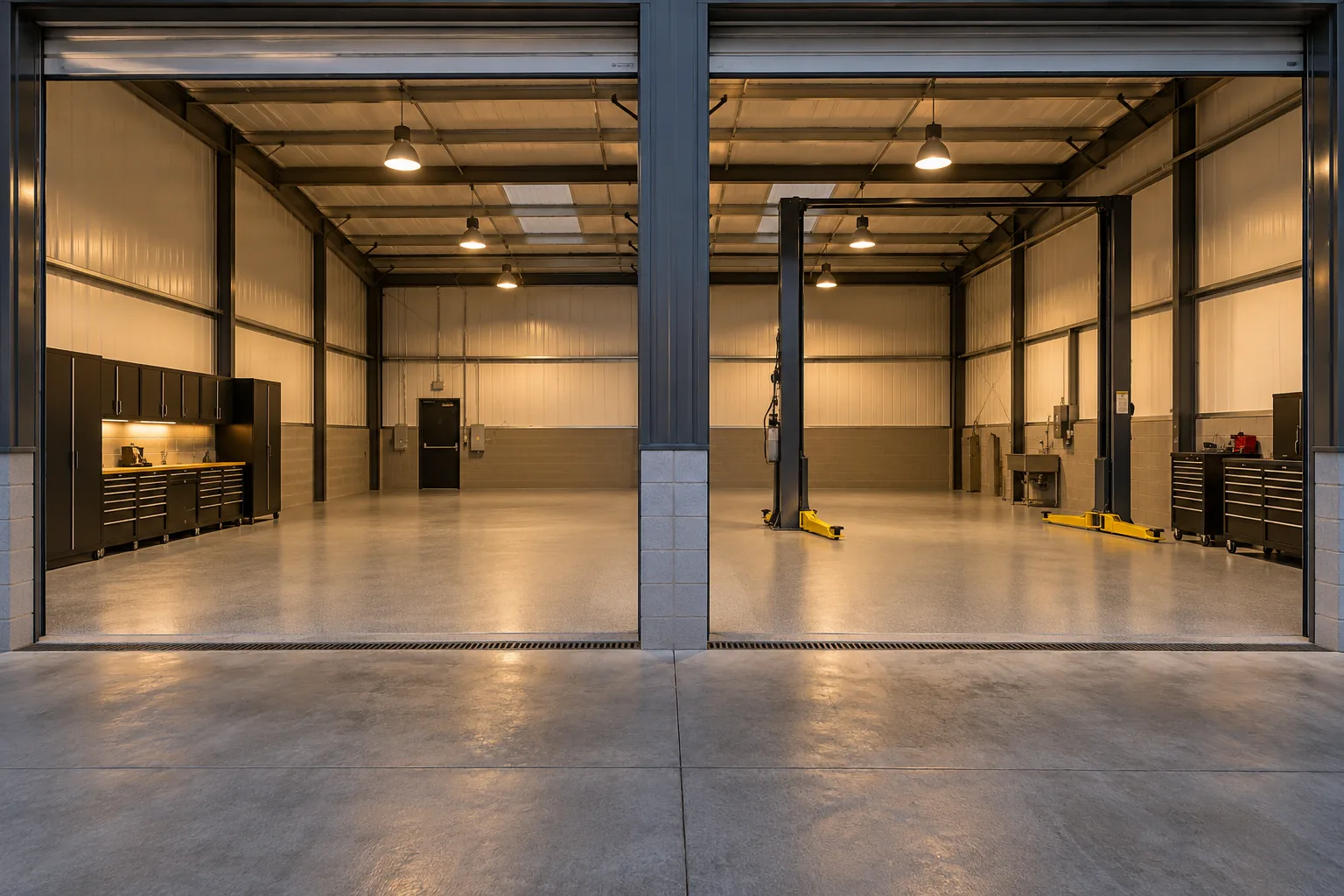
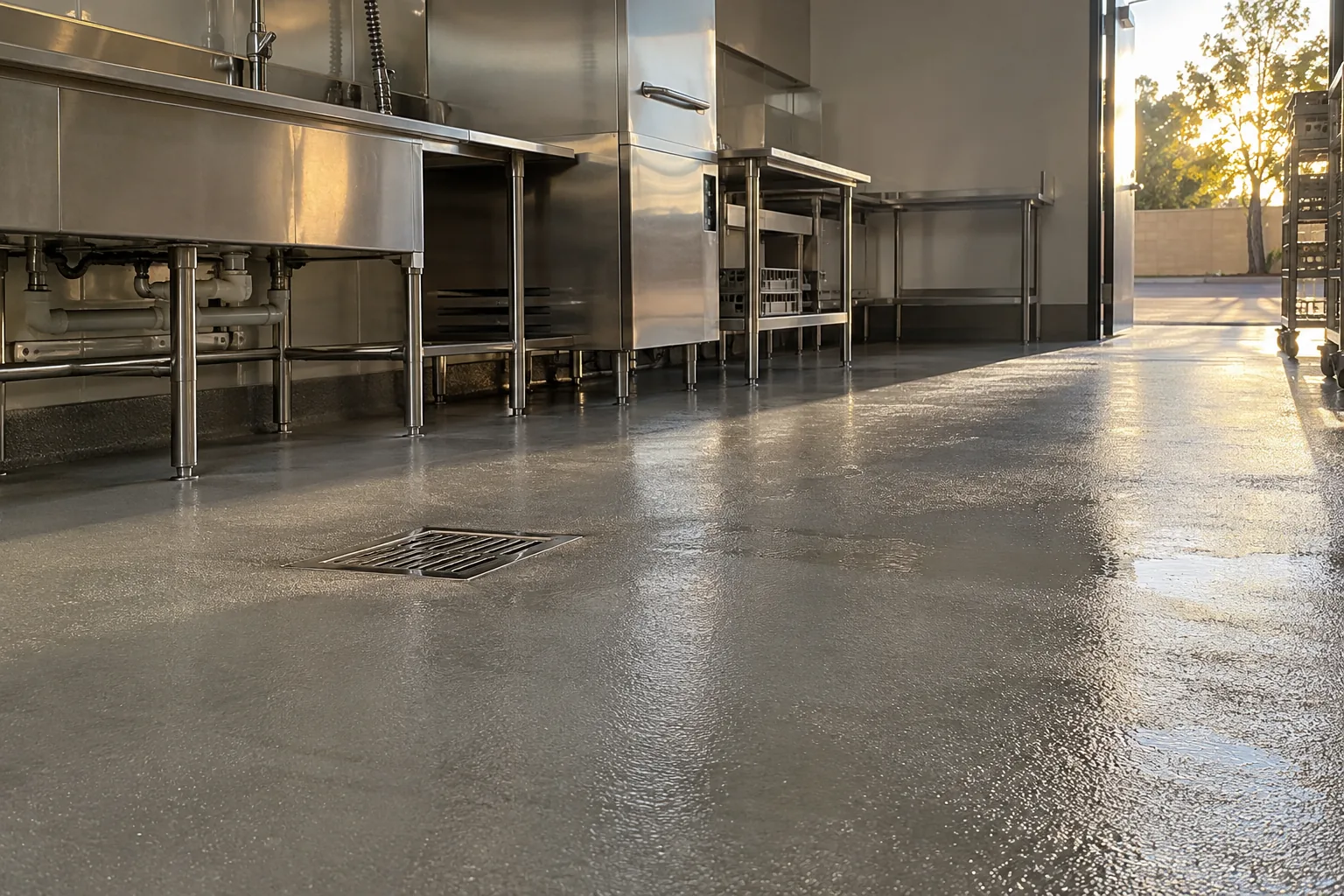
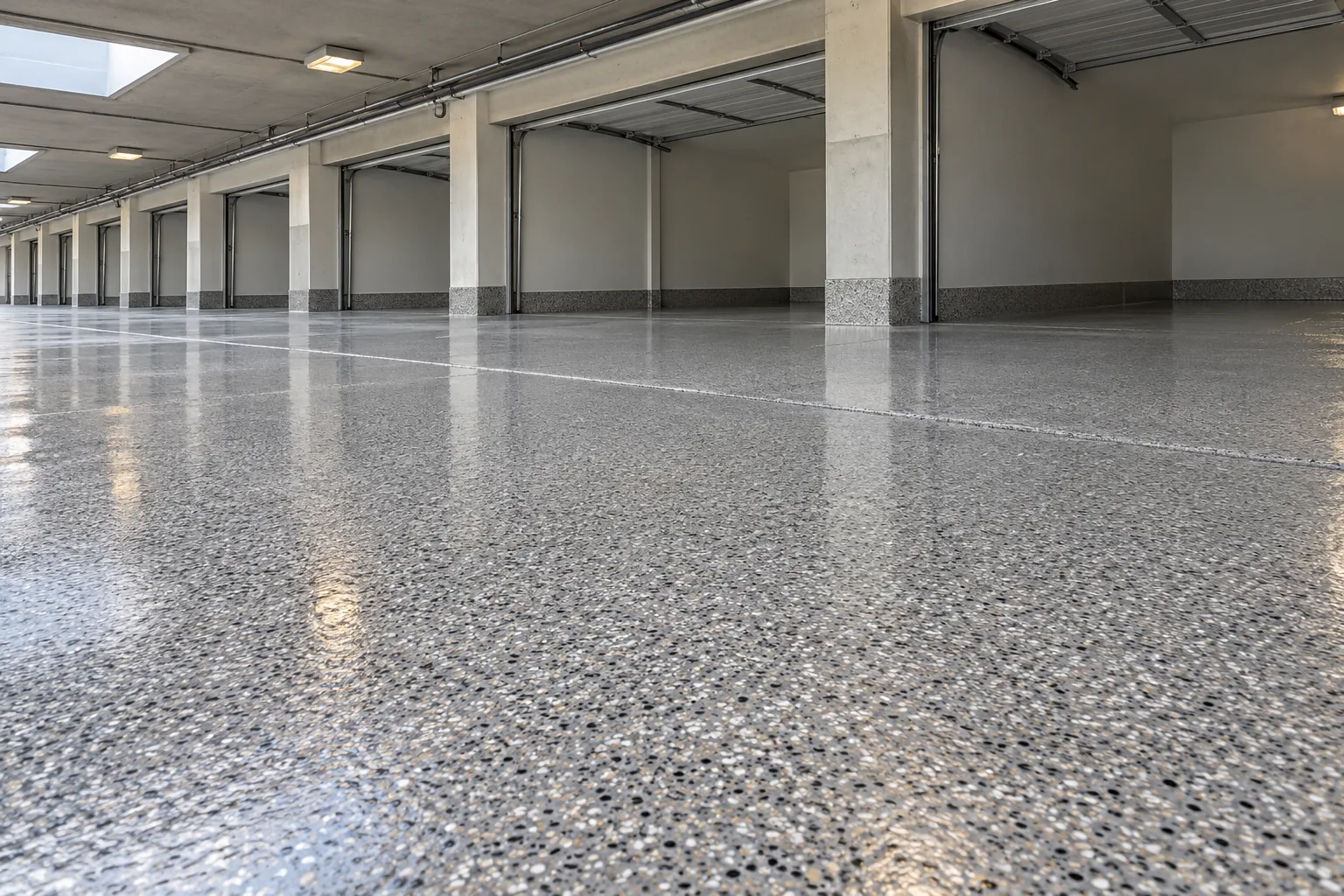
Commercial or multi-car facility floor
- Est. investment
- $5,500 to $14,000 per section (1,000 to 2,000 sq ft)
- Est. duration
- 3 to 5 days
Phased by section, high-build epoxy or quartz, cove and striping as needed
Riverside Epoxy Flooring Group is Southern California's plant floor coating contractor, working with plant managers, facility engineers and building owners on assembly floors, machining bays and parts staging areas. We coat production floors from a single 1,000 sq ft cell to assembly areas of 3,400 sq ft split into two sections, and whole plants in as many phases as the line allows.
Request a bid or a site walk
Our crews work occupied plants, phasing each section around shifts, changeovers and planned shutdowns so the line keeps producing while the floor is redone. Backed by 12 years in business and more than 1,187 completed projects, we bring plant references to every bid, from one press bay to striped walkways across a full assembly hall.
From degreasing oil-soaked concrete and mapping spalled joints to the walkway striping and the closeout walk with your safety lead, our team handles the parts of a plant job that decide whether it finishes on schedule. Serving Riverside, Eastvale, Norco and Claremont, we hold the plant's shutdown schedule, work nights and weekends between shifts, and return each section ready for forklifts and inspection.
Request a bid with your floor plan, what the line spills and the shutdown windows you can give us.
What you can hold us to
A production floor has to survive what the process drops, spills and drives on, and that list differs from a Norco fabrication shop to an Eastvale assembly hall. Riverside's economy leans on light industry, making aircraft components, automotive parts, gas cylinders, electronics and medical devices, and each of those lines punishes concrete in its own way. Hydraulic oil soaks in and wicks back up through a thin coat, cutting fluids and solvents soften the wrong resin, dropped steel chips the surface, and forklifts on solid tires carrying one to five tons hammer every joint. Victor's assembly floor in the industrial area near the Santa Ana River had all of it: hydraulic oil soaked into the slab and walkway paint worn to nothing.
The process on the floor picks the system, not the color card, a rule 12 years of plant work has only confirmed. We read the plant's safety data sheets for what lands on the floor, then match a product whose resistance chart covers it, as we did for Frank's two-bay repair shop, about 1,800 sq ft, in Norco.
| Process on the floor | What fails first | System we usually specify |
|---|---|---|
| Assembly with hydraulic and machine oil, as on an assembly floor with hydraulic oil soaked into the slab and faded walkway paint | Oil wicking back, slick walkways | High-build epoxy, aluminum oxide grit, safety striping |
| Acid or caustic process areas, drains | Resin softening, etched concrete | Novolac epoxy, chosen from the maker's resistance chart |
| Heavy impact, dropped parts, carts | Chips and gouges | High-build epoxy, gray quartz broadcast, chemical-resistant topcoat |
| Hot water, steam cleaning, ovens | Cracking from thermal shock | Urethane cement slurry, integral cove, broadcast texture |
Novolac epoxies cure to a tightly cross-linked film with high chemical and temperature resistance; one manufacturer's data sheet lists resistance to 98% sulfuric acid for chemical process and drainage areas, loading docks and ramps. Where hot washdown or steam cleaning is part of the process, the floor moves to cementitious urethane, covered on our urethane cement floors page.
Prep decides whether a plant coating holds, so oil-soaked areas are degreased and ground until clean concrete shows, the step that cleared a two-bay truck repair shop with brake fluid and oil eating into bare concrete. Spalled saw cuts are cut back and filled with a semi-rigid epoxy or polyurea filler where forklifts cross them; joints that truly move are left to a flexible sealant instead, because a rigid filler there simply lets go. Walkways and aisles are then striped into the coating: OSHA 1910.176 asks for marked permanent aisles where mechanical handling equipment runs, OSHA 1910.22 asks that floors stay free of hazards such as leaks and spills, and yellow marks physical hazards under 1910.144.
Phased by section, high-build epoxy or quartz, cove and striping as needed
Failed DIY paint or peeling epoxy ground off before the new system
Investment and duration figures are estimates. Your written quote sets the final price and schedule.
Plant floors in Riverside are typically budgeted by section, with an estimated $5,500 to $14,000 for each 1,000 to 2,000 sq ft section, and oil contamination, joint repair and the resin system move the number most. A two-section assembly area of about 3,400 sq ft typically falls at an estimated $13,500 to $24,000, the range Victor's floor came in at.
| Plant scope | Est. investment | Est. time on site |
|---|---|---|
| One 1,000 to 2,000 sq ft production cell or bay | Est. $5,500 to $14,000 | Est. 3 to 5 days |
| Two-section assembly and parts area, about 3,400 sq ft | Est. $13,500 to $24,000 | Est. 3 to 5 days |
| Old coating removal by diamond grinding before the new system | Est. $800 to $3,000 per 400 to 600 sq ft | Est. 4 to 8 hours |
Joint rebuilding is priced by the linear foot once the joint survey is done in Riverside, Woodcrest or El Sobrante, and striping by the walkway layout your safety lead signs off.
These section figures are budgetary estimates for Riverside and are subject to change. Your written quote, confirmed on bid from the floor plan, the safety data sheets and the slab survey, sets the final price and the shutdown schedule, and it depends on how deep the oil has gone, the system specified and how many phases the line needs.
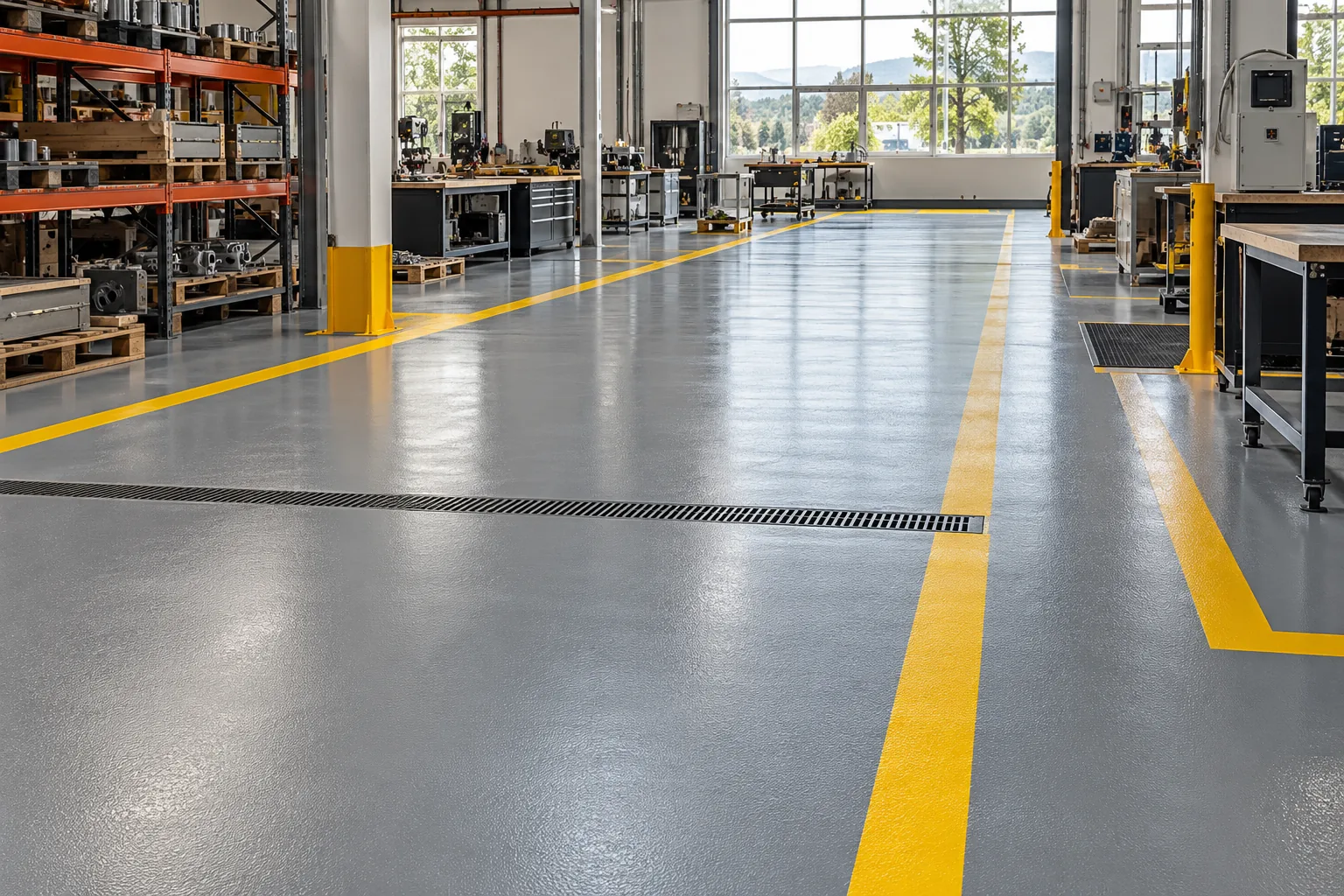
Victor, industrial area near the Santa Ana River, Riverside
An assembly floor with hydraulic oil soaked into the slab and faded walkway paint
Investment and duration figures are estimates. Your written quote sets the final price and schedule.
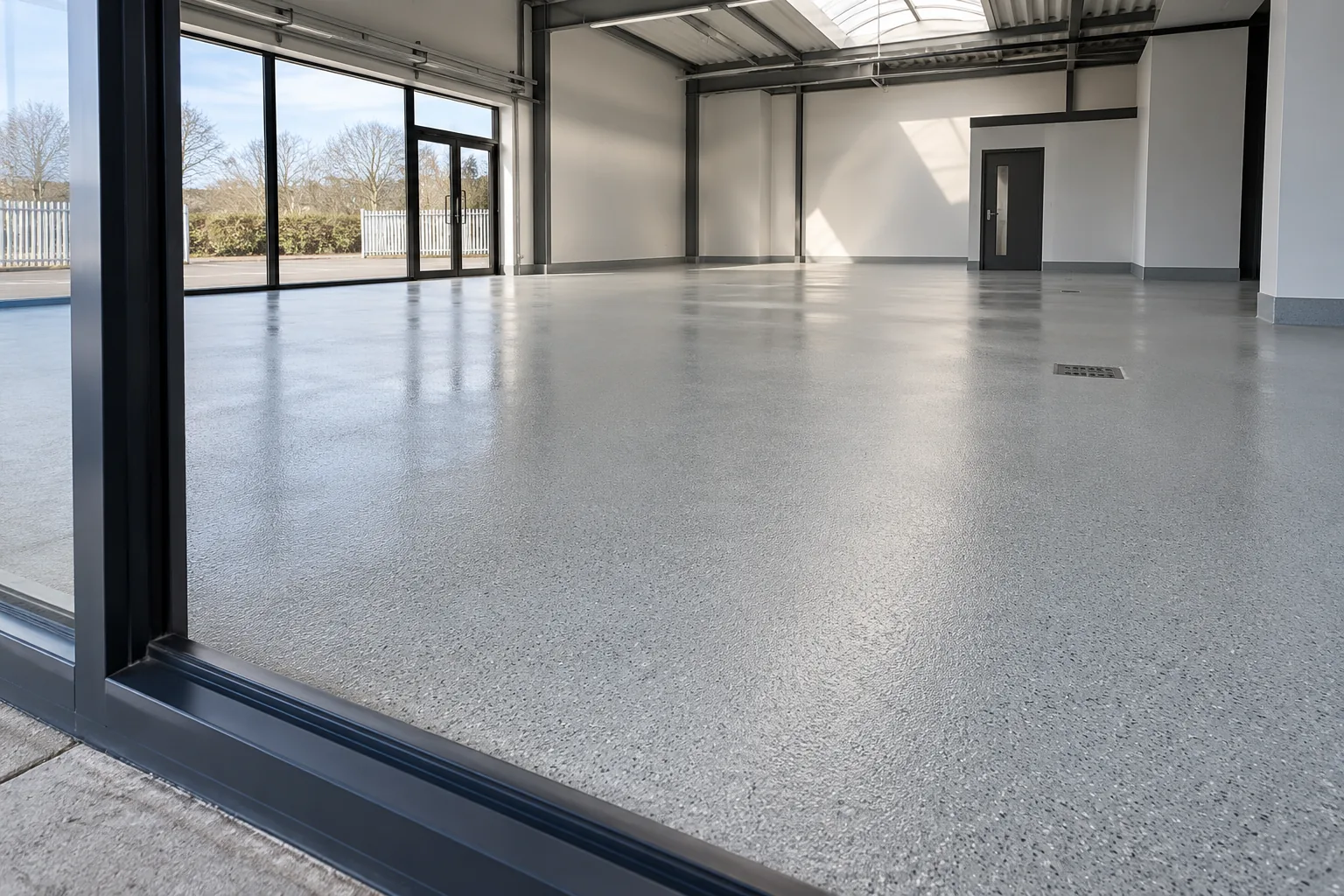
Victor's assembly and parts area, about 3,400 sq ft, in the industrial area near the Santa Ana River now has marked walkways in the floor itself and no oil wicking back through the coating. The floor was an assembly floor with hydraulic oil soaked into the slab and faded walkway paint. We recommended degreasing and grinding, then a high-build epoxy with grit and new walkway striping, phased around shifts, using high-build epoxy, aluminum oxide grit, safety striping. The work came in at an estimated $13,500 to $24,000 over an estimated 3 to 5 days, split into two sections so one half of the line ran while the other cured.
Production keeps running while we coat one zone at a time on the shifts your plant manager picks, the way Angela's showroom and back office, about 1,600 sq ft, was split into weekend phases. Each section typically takes an estimated 3 to 5 days, so we sequence them to planned shutdowns, weekend changeovers and the slow line first. Grinding runs on industrial vacuums, the current silica rules push the trade that way, and air intakes near the coat are shut and sealed when the product data sheet calls for it so odor stays out of the offices. Return-to-service windows are written per section, typically 72 to 96 hours before loaded forklifts cross a new 100% solids epoxy floor.
Plant managers choose us because we read the safety data sheets before we pick a resin, the crew that surveys your slab coats it on your shift, and 1,187 finished projects back that up. Our owner reviews every moisture test before a system is chosen, and every plant floor carries our 2-year workmanship warranty against peeling, delamination and hot-tire pickup in writing.
We bid manufacturing floors across a 45-mile radius from Riverside, starting with the plants around the Airport Industrial Area, Sycamore Canyon and Hunter Park. Light-industrial buildings in Eastvale, Norco and Woodcrest, shops near Diamond Bar and Yorba Linda, and owners in Villa Park and North Tustin with Inland plants all fall inside that radius.
Storage and shipping floors belong on our warehouse and distribution floor coatings page, fleet maintenance bays on auto shop and service bay floors, and owners comparing sectors start at commercial and industrial floor coatings. Homeowners will find garages and shops on our Riverside epoxy flooring home page.
Yes, we coat one section at a time around shifts and shutdowns, as on Victor's two-section assembly floor near the Santa Ana River.
Plant floors are priced per 1,000 to 2,000 sq ft section, typically an estimated $5,500 to $14,000 each, plus joint repair by the foot, and your written bid sets the final price.
The answer comes from your safety data sheets and the maker's resistance chart, which is why plants from Claremont to San Antonio Heights send both with the bid request.
Yes, after degreasing and grinding to clean concrete, as on the Riverside assembly floor where hydraulic oil had soaked deep into the slab.
Loaded forklifts typically wait 72 to 96 hours on 100% solids epoxy, and that window is written into the section schedule.
Yes, walkways and caution zones are laid out with your safety lead and built into the coating, the same high-build epoxy, aluminum oxide grit, safety striping system used near the Santa Ana River.
A lead installer runs every crew on site, our estimator stays your single contact through closeout, and plants as far as Diamond Bar get the same 45-mile service.
Every floor carries our 2-year workmanship warranty, plus the coating maker's product warranty, typically 5 to 10 years on professionally installed systems.
Request a bid with your floor plan, safety data sheets and shutdown calendar, from Yorba Linda to Villa Park, and we will schedule the slab survey.
Start to finish
We walk the slab with you, map cracks, joints and old coatings, and take moisture readings before a system is named.
The system, every coat and its thickness, the colors and the cure and return-to-service times arrive in writing.
The slab is diamond ground with dust control, cracks and joints are filled, and each coat goes down inside its recoat window.
We walk the cured floor with you, go over the care notes and tell you when cars or equipment can come back.
Where we work
Call us or send plans, square footage or a walk date, and we will set a site walk and return a written bid.
Calls only, we do not receive text messages.